
Mini Split Service in Montegut, LA
Ductless mini-split repair in Montegut with fast diagnostics and dependable fixes. Contact Martin's Heating & Air for prompt service and comfort today.
Inefficient Cooling or Heating Performance Disrupting Your Comfort?
Coping with the intense humidity and heat in Montegut can be unbearable when your mini split system fails to maintain the set temperature, leaving your home uncomfortable and humid. If your system is leaking, making strange noises, or simply blowing warm air, Martin's Heating & Air Conditioning provides the technical expertise needed to restore your indoor climate immediately; contact us to schedule a comprehensive diagnostic or discuss financing options for a new system today.
Restoring your comfort requires a methodical approach to troubleshooting and repair.
- Rapid, reliable service designed to get your ductless system running efficiently without delays.
- Clear, data-driven advice on whether to repair or replace, utilizing the industry-standard $5000 rule.
- 24/7 availability to address critical cooling failures whenever they occur.
Our team operates with full licensing and warranty backing to ensure every service call provides long-term peace of mind.
Comprehensive Diagnostics and Repair Protocols
When a ductless mini split malfunctions, the issue often lies within the complex interplay of electronic controls and refrigerant cycles. Unlike traditional central HVAC systems, mini splits rely on sophisticated inverter technology that requires specialized diagnostic tools. A standard service visit focuses on identifying the root cause of the failure rather than just treating the symptom.
Technicians begin by analyzing the error codes displayed on the indoor unit or the outdoor condenser control board. These codes provide immediate insight into communication errors, sensor failures, or voltage irregularities. Following the code reading, the electrical connections are inspected. Loose wiring or corroded terminals can cause intermittent power loss or hazardous short circuits. The inverter board, which regulates the compressor speed to match the cooling demand, is tested to ensure it is modulating frequency correctly.
Refrigerant levels are critical for the operation of a mini split. A system low on refrigerant cannot absorb heat effectively, leading to frozen coils and water leaks. Technicians use gauges to measure operating pressures and subcooling levels to verify if a leak exists. If a leak is detected, it must be located, brazed, and tested before recharging the system to manufacturer specifications.
Cleaning is another vital component of the service visit. In humid environments, the blower wheel inside the wall unit can accumulate mold and dust, creating a heavy biofilm. This buildup disrupts airflow and reduces efficiency. A deep clean involves disassembling the cabinet to wash the filters, the evaporator coil, and the blower wheel, ensuring the air remains healthy and the system runs quietly.
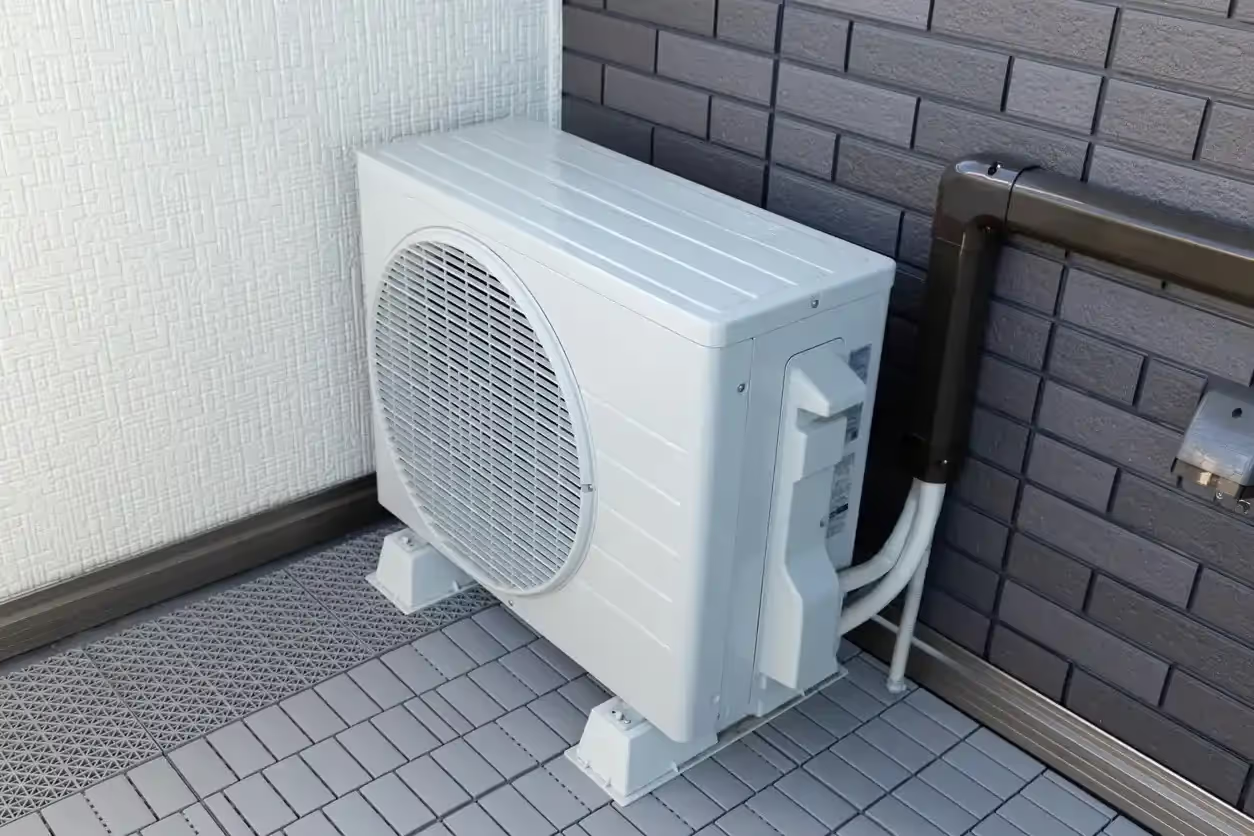
The Mini Split Installation and Replacement Process
Installing a new ductless system or replacing an aging unit is a multi-step construction process that integrates seamlessly with your existing structure. The goal is to provide targeted climate control without the energy loss associated with ductwork. A proper installation ensures maximum efficiency and longevity for the equipment.
Load Calculation and Sizing
The process begins with a precise Manual J load calculation. This determines the exact BTU capacity required for the specific room or zone. Installing a unit that is too large will cause it to short-cycle, leading to humidity issues, while a unit that is too small will run continuously without reaching the desired temperature.
Location Selection and Mounting
Technicians identify the optimal wall placement for the indoor unit to ensure balanced airflow distribution. The mounting plate is leveled and secured to wall studs or reinforced anchors. For the outdoor condenser, a location is chosen that allows for proper heat dissipation and minimizes noise transfer to indoor spaces.
Drilling and Line Set Routing
A three-inch hole is drilled through the exterior wall to accommodate the refrigerant lines, drain hose, and communication wire. The hole is drilled at a slight downward angle to facilitate gravity drainage for condensation. Line sets are then routed through the wall, often covered by decorative housing to protect the insulation from UV damage and pests.
System Connection and Vacuuming
The refrigerant lines are flared and connected to both the indoor and outdoor units. A torque wrench is used to tighten flare nuts to precise specifications to prevent leaks. Once connected, a vacuum pump is attached to the system to remove moisture and non-condensable gases from the lines. This step is crucial for preventing compressor damage.
Testing and Commissioning
The system is pressurized with refrigerant, and the valves are opened. Technicians power on the unit and test all operating modes, including cooling, heating, dry mode, and fan speeds. The temperature differential between the return air and supply air is measured to verify cooling capacity.
Assessing Repair Viability Versus Replacement
Deciding whether to sink money into a repair or invest in a new system is a financial calculation based on the age of the unit, the cost of the repair, and the system’s recent performance history. Homeowners often face this dilemma when a major component, such as the compressor or the inverter board, fails.
HVAC professionals often utilize the "$5000 Rule" to guide this decision. This formula involves multiplying the age of the equipment by the estimated cost of the repair. If the total exceeds $5000, replacement is generally the more strictly economic choice. For example, if a system is 10 years old and requires a $600 repair, the total is $6000, suggesting that investing that money into a new unit with a warranty is a safer bet.
Equipment age is a primary factor. Mini split systems generally have a lifespan of 15 to 20 years with proper maintenance. However, as units age, parts availability can become an issue, and efficiency drops. If a unit is over 12 years old and uses R-22 refrigerant (which is phased out and expensive), replacing it with a modern R-410A or R-32 system will result in immediate energy savings that help offset the installation cost.
Frequency of breakdowns also signals the end of a unit's useful life. If you have required multiple service calls in the last two years, the system is likely suffering from systemic wear. Martin's Heating & Air Conditioning can provide a side-by-side cost analysis of the proposed repair versus the monthly financing cost of a high-efficiency replacement, allowing for a decision based on long-term value rather than short-term fix expenses.
Local Considerations for System Performance
Operating a mini split in Montegut requires specific attention to the environmental factors unique to the region. The climate presents challenges that standard installations in drier, cooler areas do not face. Equipment must be configured to handle high latent heat loads, meaning the moisture content in the air.
Humidity Control and Drainage
The intense humidity in this region means mini splits generate a significant amount of condensate water. Drain lines must be meticulously pitched and often require condensate pumps if gravity drainage isn't possible. Blocked drain lines are a common cause of service calls, leading to water damage on interior walls. Technicians check that the "Dry Mode" function is operational, which prioritizes dehumidification over rapid cooling.
Corrosion Protection
Proximity to the Gulf and general atmospheric salinity can accelerate corrosion on the outdoor condenser coils. Aluminum fins can deteriorate, reducing heat exchange efficiency. Local installations often recommend units with anti-corrosive coatings on the coils (often called "gold fin" or "blue fin" technology) to extend the life of the equipment against the salt air.
Hurricane and Wind Security
Due to the risk of tropical storms and hurricanes, the outdoor condenser unit must be securely anchored. Local codes may require specific tie-downs or concrete pads to prevent the unit from shifting or tipping during high-wind events. Elevating the unit on a stand is also common practice to protect it from potential localized flooding or standing water.
Electrical Permitting and Code Compliance
Any significant repair involving electrical components or a full replacement requires adherence to local building codes. This includes ensuring a dedicated circuit of the correct amperage at the disconnect box and proper wire gauging. Licensed contractors handle the permitting process to ensure the work passes inspection and maintains home insurance validity.
Why Specialized Ductless Care Matters
Ductless mini splits are technically distinct from standard central air conditioning systems. They utilize variable refrigerant flow technology and proprietary electronic communication protocols that require specific training. A general handyman or a technician only familiar with traditional split systems may misdiagnose inverter issues or improperly handle the sensitive flare connections required for ductless lines.
Choosing a service provider that specializes in mini splits ensures that the technician arrives with the correct inventory of parts. Control boards, thermistors, and stepper motors are often brand-specific. Access to these components reduces downtime, ensuring that a diagnostic visit can often transition immediately into a repair visit.
Furthermore, specialized care involves a deeper understanding of zoning. Since mini splits often control the climate of a single room or zone, the technician must understand how to balance the remote control settings with the actual room load. This includes calibrating the "Follow Me" features found in many remotes, which tell the unit to sense temperature at the remote's location rather than at the wall unit (which may be high up and warmer).
Proper maintenance records are essential for warranty preservation. Manufacturers of major mini split brands require proof of professional installation and regular maintenance to honor parts warranties. Professional documentation of every pressure check, amp draw reading, and coil cleaning provides the paper trail needed to protect the homeowner’s investment.
Securing Your Home Comfort
Maintaining a comfortable indoor environment requires a cooling system that operates at peak efficiency. Whether the solution involves a complex repair of an inverter board, a deep cleaning of the blower wheel to remove biological growth, or a complete system replacement to improve energy efficiency, the focus remains on technical precision and long-term reliability.
Martin's Heating & Air Conditioning delivers the expertise required to navigate these decisions, ensuring that every home remains cool and dehumidified regardless of the weather outside. Don't let a failing system compromise your quality of life.
Contact our team today to schedule your service or request an estimate for a new system.
Talk to a Local HVAC Expert

.avif)