Is Your Heat Pump Failing When You Need it Most?
Don't let a malfunctioning heat pump leave you sweating in the summer heat or shivering during a mild Montegut winter. A broken system disrupts your life and introduces humidity risks to your home, but Martin's Heating & Air Conditioning offers rapid, reliable repairs to get your system back in perfect shape. Contact us today to schedule a diagnostic visit or to discuss financing options for major repairs.
We understand that HVAC issues rarely happen at convenient times, which is why we prioritize speed and accuracy in every service call. Our approach ensures you are not left waiting in discomfort while assessing the viability of your current system.
- Quick restoration of HVAC functionality ensuring comfort and safety.
- Professional technicians available 24/7 for emergency service calls.
- Thorough diagnostics to prevent future issues with your heat pump.
All repairs come with a warranty and are performed by licensed professionals, with financing options available.
Identifying Urgent Heat Pump Issues
Heat pumps are versatile systems that handle both heating and cooling, which means they run year-round in Louisiana’s climate. This constant operation puts significant strain on internal components. Recognizing the signs of failure early can prevent a minor part replacement from turning into a catastrophic system breakdown. Homeowners in Montegut often ignore subtle noises or slight temperature discrepancies, but these are often indicators that the system is struggling to maintain the set point.
The most common sign of a heat pump requiring immediate professional attention is a failure to switch modes. The reversing valve is the specific component responsible for swapping the flow of refrigerant to change from cooling to heating. If this valve gets stuck, your system will blow cold air when you need heat, or vice versa. This is not a DIY fix; it requires accessing the sealed refrigerant system, which can only be done by certified technicians.
Another critical issue involves the outdoor unit freezing up during the winter or short-cycling during the summer. While a light frost in winter is normal during a defrost cycle, a unit encased in a block of ice indicates a problem with airflow, refrigerant levels, or the defrost control board. Conversely, short-cycling—where the unit turns on and off rapidly—places immense stress on the compressor. This is often caused by electrical issues, thermostat calibration errors, or a safety switch tripping due to high pressure.
Comprehensive Diagnostic and Repair Protocol
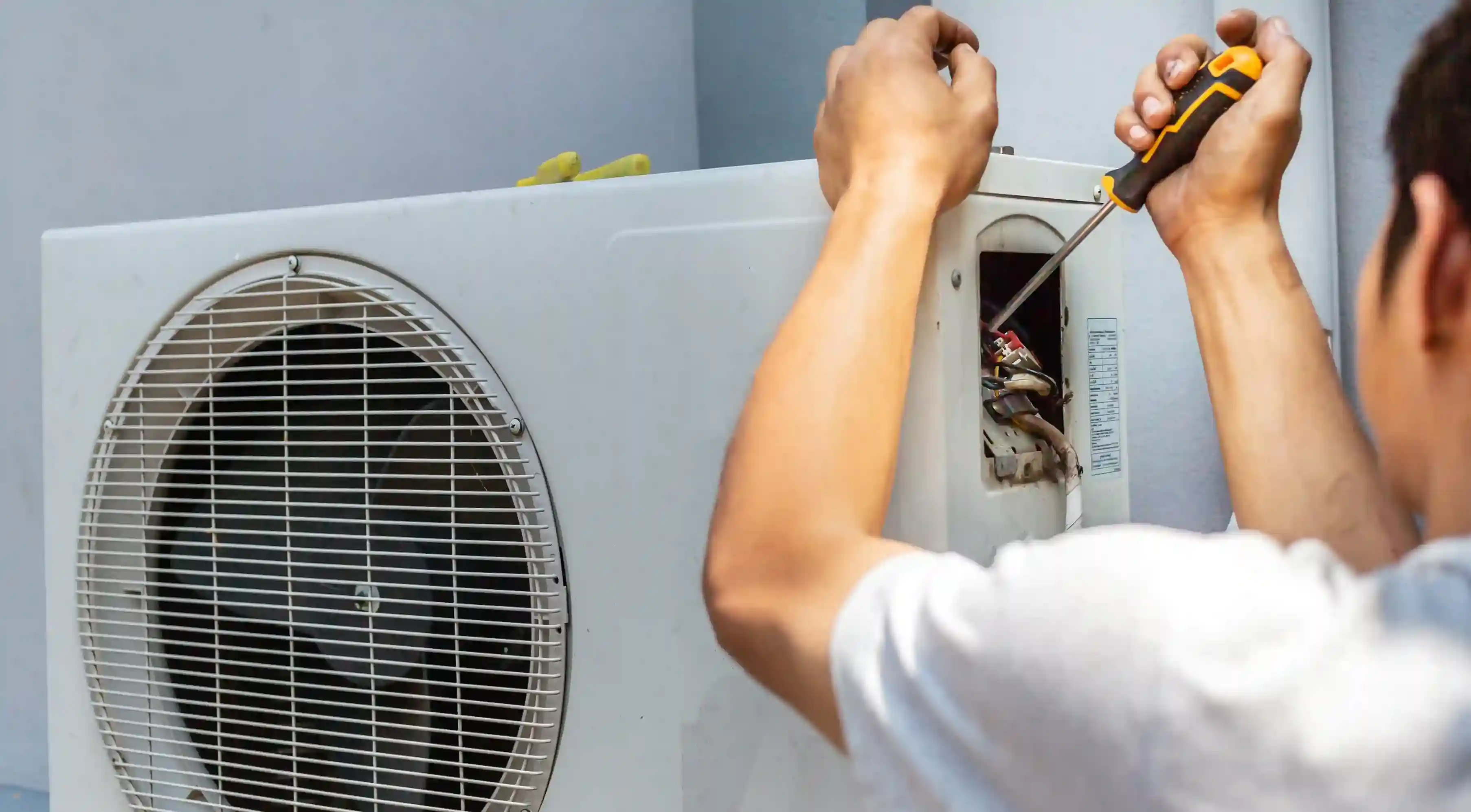
When you request service, the goal is not just to swap a part but to understand why the failure occurred. A blown capacitor might be the immediate reason a fan stopped spinning, but if the motor is drawing too many amps, the new capacitor will fail shortly as well. A holistic approach to repair ensures that the root cause is addressed, protecting your investment and ensuring long-term reliability.
Technicians arrive with fully stocked vehicles containing universal parts, refrigerants, and diagnostic tools to handle the majority of repairs on the first visit. The focus is on minimizing downtime so your home returns to a comfortable temperature and humidity level as quickly as possible.
The Repair Workflow
The process of restoring a heat pump follows a logical, safety-focused sequence designed to isolate variables and ensure a correct fix.
- Initial System Assessment: The technician begins by listening to the unit and checking the thermostat settings. They measure temperature differentials (Delta T) between the return and supply air to gauge current performance.
- Electrical Safety Inspection: Power is disconnected to safely inspect wiring, contactors, and capacitors. Loose connections or pitted contactors are common culprits in systems that vibrate during operation.
- Refrigerant Pressure Testing: Gauges are attached to the service ports to measure subcooling and superheat. These readings tell the technician if the system has a leak, a blockage, or a failing compressor.
- Component Isolation: If a specific part like the blower motor or outdoor fan is suspected, it is electrically isolated and tested for resistance and amp draw.
- Quote and Approval: Once the problem is identified, you receive a clear explanation of the failure and a flat-rate quote for the repair. Work proceeds only after you understand the scope and cost.
- Execution and Verification: The failed component is replaced, or the leak is repaired. The system is then restarted and monitored for a full cycle to ensure pressures stabilize and the temperature split is correct.
- Site Cleanup: The workspace is left clean, and the technician provides a service report detailing what was done and the current health of the system.
Troubleshooting High Humidity and Cooling Failures
In the Montegut area, removing humidity is just as important as lowering the temperature. A heat pump that runs but fails to dehumidify creates a clammy, uncomfortable indoor environment that can promote mold growth. This specific failure mode is often tied to the evaporator coil or airflow settings.
If the evaporator coil is dirty or impacted by debris, the heat transfer process is inhibited. The system runs longer but removes less moisture. Similarly, if the blower motor speed is set too high, the air moves over the coil too quickly to allow for adequate dehumidification. Technicians adjust blower speeds and clean coils to restore the latent cooling capacity of the unit.
Refrigerant leaks also manifest as a loss of humidity control before the system stops cooling entirely. Low refrigerant levels cause the evaporator coil to freeze, blocking airflow. Detecting leaks involves using electronic sniffers or UV dye to locate the breach in the copper lines. Once found, the refrigerant must be recovered, the line brazed, and the system recharged to factory specifications.
Deciding Between Repair and System Replacement
Homeowners often face a difficult choice when a major component fails: is it worth fixing, or is it time for a new unit? This decision relies on several data points, including the age of the equipment, the frequency of recent repairs, and the cost of the current repair bill relative to a new system.
The 50% Rule and Age Factor
A widely accepted industry standard is the 50% rule. If the cost of the repair approaches 50% of the value of a new system, replacement is generally the wiser financial move. This is particularly true if the heat pump is out of warranty.
Age is the second major factor. Heat pumps in Louisiana work harder than those in milder climates because of the long cooling season. A system that is 10 to 12 years old is nearing the end of its reliable service life. While a repair might keep it running for another year, efficiency levels (SEER ratings) have likely degraded. An older unit may be costing you significantly more in monthly utility bills compared to a modern, high-efficiency system.
Refrigerant Considerations
The type of refrigerant your system uses is a critical decision driver. Older systems utilize R-22 (Freon), which has been phased out and is now prohibitively expensive to restock. If your R-22 system develops a leak or requires a compressor replacement, the cost of the refrigerant alone often makes repair financially illogical. Newer systems use R-410A or next-generation refrigerants, which are more efficient, environmentally friendly, and affordable to service.
Local Climate Factors Impacting Repair Needs
Operating a heat pump in Montegut presents unique challenges due to the specific environmental conditions of the region. The proximity to the Gulf means that equipment is exposed to salt air, high humidity, and occasional severe weather events.
Corrosion and Coil Decay
Salt air accelerates the corrosion of aluminum fins and copper tubing in the outdoor condenser unit. This corrosion acts as an insulator, preventing the heat pump from releasing heat efficiently during the summer. Over time, this leads to higher operating pressures and premature compressor failure. Technicians look for signs of "fin rot" or crumbling metal during inspections. While coatings can help, severe corrosion often necessitates coil replacement to prevent leaks.
Hurricane Season Preparedness and Recovery
From June through November, the threat of hurricanes requires robust HVAC systems. Power surges and brownouts associated with storms can damage sensitive electronic control boards and inverter-driven compressors. After a storm, it is vital to inspect the outdoor unit for debris impact and to check the base for shifting. A unit that is not level will cause the compressor to wear unevenly and vibrate excessively, leading to noise and eventual failure.
Winter Defrost Cycles
While winters are mild, temperatures do drop enough to trigger the defrost mode on heat pumps. In high-humidity environments, frost builds up on the outdoor coil quickly. The system must reverse itself to melt this ice. If the defrost sensors or boards fail, the unit will become an ice block, stopping all heat transfer. Technicians in this region are specifically trained to calibrate defrost boards to handle the high moisture content of the winter air, ensuring the cycle runs only as often as needed to maintain efficiency without wasting energy.
Why Professional Service Matters
Modern heat pumps are complex machines involving high-voltage electricity and high-pressure gases. Attempting DIY repairs not only voids manufacturer warranties but also poses serious safety risks. Professional repair ensures that all work adheres to local building codes and safety standards.
Licensed technicians bring a depth of experience that allows them to spot potential future failures while fixing the immediate problem. For example, while replacing a contactor, a pro might notice that the wiring insulation is rubbing against the copper line set, a future short circuit waiting to happen. Correcting these small issues during a service call prevents emergency breakdowns later.
Furthermore, professional service includes access to proprietary parts and warranty support. Martin's Heating & Air Conditioning ensures that every repair is documented and backed by labor guarantees, providing peace of mind that the fix will last.
Restoring Your Home's Comfort
When your climate control system falters, you need a solution that is fast, transparent, and technically sound. Whether you are dealing with a frozen coil, a broken reversing valve, or a system that simply won't turn on, professional intervention is the only way to ensure the longevity of your equipment. Ignoring the problem will only lead to higher energy bills and more extensive damage to the compressor and internal components.
We focus on delivering results that improve your indoor air quality and temperature consistency. By addressing both the mechanical failure and the underlying causes—such as airflow restrictions or electrical variances—we restore your system to its peak performance capabilities.
Don't let a broken heat pump compromise your comfort or safety. Schedule your repair service today and ensure your home remains a sanctuary against the weather.
Talk to a Local HVAC Expert
.avif)