Ev Chargers in Raceland, LA
Electrical repair and upgrades in Raceland, LA for safer, reliable power. Contact Martin's Heating & Air for fast diagnostics, transparent pricing, today.
Secure Fast, Reliable Home Charging for Your Electric Vehicle
Navigating the complexity of installing an EV charger at home can be daunting, especially when relying on standard outlets leaves your vehicle underpowered and unprepared for the day ahead. Whether you are looking for cost-effective options or speedy installation in Raceland, LA, we have you covered. Contact us today to schedule your electrical assessment or to discuss available financing options:
- Experienced professionals ensure installation within 24 hours.
- Competitive pricing models starting at $899, with no hidden fees — view current specials.
- All installations come with a 1-year warranty on parts and labor for peace of mind.
At Martin's Heating & Air Conditioning, each service meets local compliance with permits neatly handled, ensuring you are up to code.
What Is Included in Your Installation Package
When you commit to a dedicated home charging station, you are investing in infrastructure, not just a device. The primary goal is to convert your home’s standard electrical flow into a high-powered fueling station for your vehicle. A standard wall outlet, known as Level 1 charging, often requires over 24 hours to fully charge a modern EV battery. Our service focuses on Level 2 installation, which drastically reduces this time, often filling a battery in 4 to 8 hours.
The scope of work begins with an assessment of your current electrical capacity. Electric vehicles require a dedicated 240-volt circuit, similar to what powers an electric dryer or oven. The installation package includes the provision and installation of a new circuit breaker in your main electrical panel. If your panel is currently at maximum capacity, the scope may expand to include a sub-panel installation or a main panel upgrade to handle the additional amperage safely.
Hardwiring the unit versus installing a heavy-duty NEMA 14-50 outlet is a critical decision included in the service. Hardwired units are directly connected to the electrical supply, offering higher charging speeds and greater weather resistance, which is vital for outdoor installations. Alternatively, plug-in models offer portability but require a specialized, industrial-grade receptacle to prevent overheating.
Materials included in a standard installation involve high-gauge copper wiring, conduit for physical protection of the wires, and all necessary mounting hardware. Whether the charger is mounted on a garage wall or a pedestal in a driveway, the package ensures the unit is secure and accessible. Martin's Heating & Air Conditioning ensures that every component used is rated for the specific load requirements of your vehicle, preventing voltage drop and ensuring efficient energy transfer.
Finally, the package includes post-installation testing and configuration. Modern smart chargers often require Wi-Fi connectivity to track energy usage and schedule charging during off-peak hours. The setup process ensures your charger communicates correctly with your home network and your vehicle, allowing you to monitor status remotely.
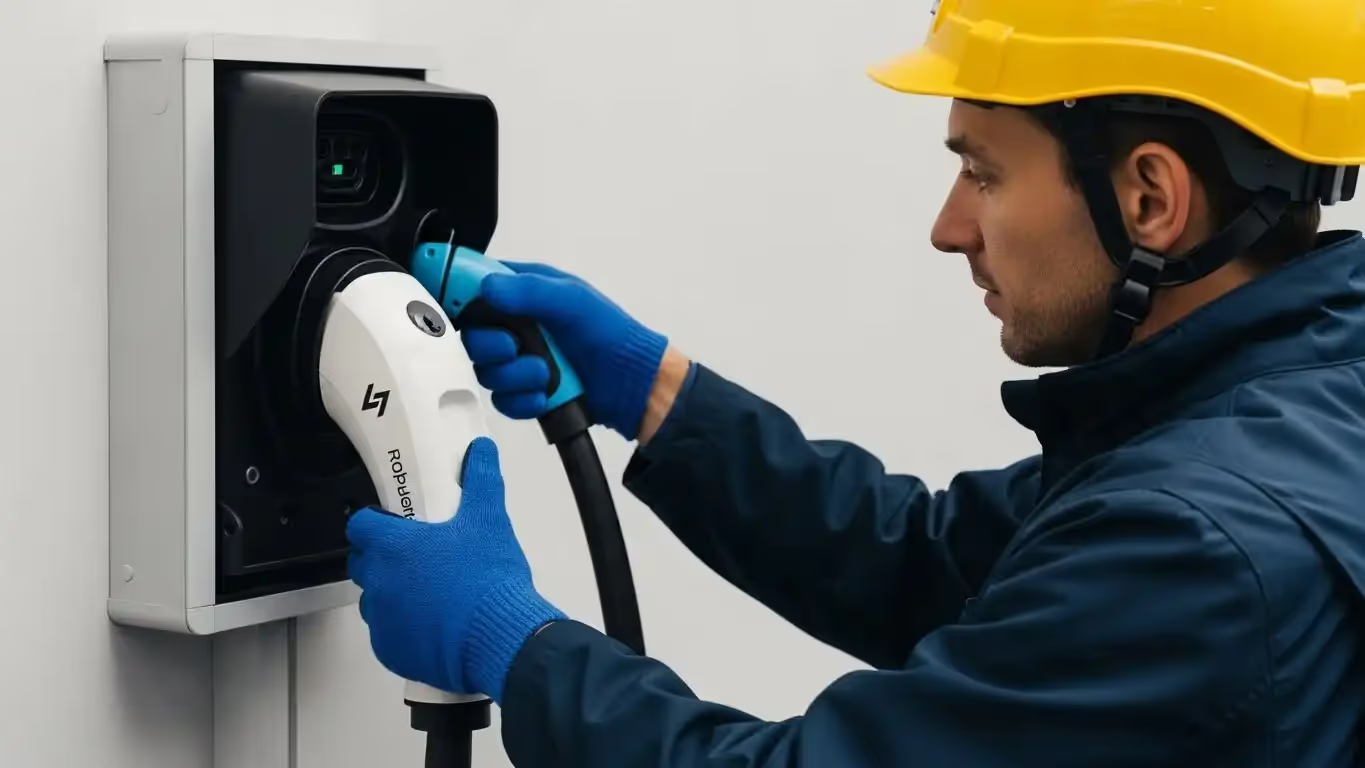
Installation Process: From Consultation to Final Touches
A structured approach to installation guarantees safety and efficiency. Attempting to install high-voltage equipment without a standardized process introduces risks of fire or equipment damage. The professional workflow is designed to minimize disruption while maximizing the performance of your new equipment.
Site Evaluation and Load Calculation
- The process begins with a detailed load calculation of your home. The technician inventories existing high-wattage appliances—such as HVAC systems, water heaters, and electric ranges—to determine if the existing 100-amp or 200-amp service can support an EV charger.
- The physical location of the charger is determined based on the parking orientation of your vehicle and the location of the charging port.
- Distance from the main panel is measured to calculate voltage drop and determine the correct wire gauge.
Permitting and Regulatory Approval
- Before any tools are used, the necessary electrical permits are pulled. This step is non-negotiable for insurance purposes and future home resale.
- The permit application outlines the scope of work, ensuring the planned installation meets current National Electrical Code (NEC) standards.
Rough-In and Wiring
- Technicians run the conduit from the electrical panel to the charging location. This may involve running pipe along garage walls, through attics, or digging trenches for underground conduit if the charger is detached from the main structure.
- High-capacity conductors are pulled through the conduit. A dedicated ground wire is installed to ensure safety during fault conditions.
- The new circuit breaker is installed in the main panel but left in the "off" position until all connections are verified.
Mounting and Termination
- The charging unit or NEMA outlet is securely mounted to the wall or pedestal using heavy-duty anchors.
- Electrical connections are torqued to manufacturer specifications. Loose connections are the leading cause of electrical fires in high-amperage circuits, so this step requires precision tools.
- If the unit is hardwired, a watertight connection is established to prevent moisture ingress.
Commissioning and Testing
- The circuit is energized, and voltage levels are verified at the terminal.
- A test charge is performed to ensure the vehicle accepts the current and that the charger does not trip the breaker under load.
- Smart features are configured, including setting amperage limits if required by the panel capacity.
Choosing Between EV Charger Replacement or Repair
Once you have an EV charger installed, it becomes a critical appliance. When it malfunctions, you are left unable to fuel your vehicle. Deciding whether to repair an existing unit or replace it entirely depends on the age of the unit, the nature of the failure, and changes in your vehicle’s technology:
When to Opt for Repair
- Loose Connections: If the unit works intermittently, it may simply be a loose wire at the terminal or breaker. This is a straightforward electrical fix that does not require new hardware.
- Cord Damage: Physical damage to the charging cable or connector head can sometimes be repaired by replacing just the cord assembly, provided the internal electronics of the station are intact.
- Software Glitches: Smart chargers sometimes lose connectivity or require a firmware reset. If the hardware is powering on but not communicating, a service call for troubleshooting is the right path.
- Breaker Tripping: If the breaker trips occasionally, the issue might be with the breaker itself or a temporary surge, rather than a failed charger.
When Replacement is Necessary
- Internal Component Failure: If the internal circuit board of the charger has failed, replacement is usually more cost-effective than attempting component-level repair.
- Inadequate Charging Speed: If you bought a newer EV with a larger battery and faster acceptance rate, an older 16-amp or 30-amp charger may be too slow. Upgrading to a 48-amp or 60-amp unit requires a full replacement and likely wiring upgrades.
- Physical Case Damage: If the outer casing is cracked, especially for outdoor units, the internal components are exposed to moisture. Replacement is required to prevent electrocution hazards.
- Obsolete Connector Types: While the J1772 connector is standard, standards evolve. If you switch to a vehicle with a NACS (Tesla style) port and want a native solution without adapters, a station swap is ideal.
Local Compliance and Seasonal Considerations
Installing an EV charger in Raceland involves specific regional challenges that generic installation guides do not address. The local climate and utility requirements play a significant role in how the installation is designed and executed:
Handling Humidity and Moisture
- The high humidity levels in Louisiana can accelerate corrosion on electrical contacts. For outdoor installations or unconditioned garages, we utilize NEMA 3R or NEMA 4 rated enclosures which provide superior protection against ingress of water and condensation.
- Dielectric grease is often applied to connections to prevent oxidation that leads to increased resistance and heat buildup.
- PVC conduit is preferred for underground runs due to the high water table, while rigid metal conduit requires careful sealing to prevent rust.
Heat Management
- Electrical components generate heat, and EV chargers run at high loads for hours. In the peak of summer, ambient temperatures in a garage can exceed 100 degrees.
- Technicians may de-rate the charger (set it to a slightly lower amperage) if the ambient temperature is consistently high, to prevent the internal thermal sensors from tripping the unit off during a charge cycle.
- Wiring is sized with temperature correction factors in mind. In hot attics, standard wire gauges may not carry the same current safely, necessitating thicker wiring to comply with code.
Utility and Permit Requirements
- Local utility providers may have specific requirements regarding the placement of disconnect switches. Some jurisdictions require a visible disconnect switch near the charger for emergency shut-off.
- Load management devices may be required if your home’s electrical service is borderline. This technology allows the charger to operate only when the rest of the home is not using peak power, avoiding the need for an expensive service panel upgrade.
- Compliance with the National Electrical Code (NEC) Article 625 is mandatory. This covers the height of the mount, protection against physical damage (bollards or wheel stops), and ventilation requirements.
Why Trust Us? Our Credentials and Commitment
Selecting the right partner for your EV infrastructure ensures longevity and safety. Electricity at the levels required for vehicle charging behaves differently than standard lighting circuits. It creates continuous thermal stress on connections, meaning the margin for error is non-existent:
Certified and Insured Professionals
- We deploy only licensed electricians who specialize in residential high-voltage systems. This ensures that every aspect of the job, from load calculation to final torque specifications, adheres to strict safety protocols.
- Liability insurance covers the workspace, protecting your property during the installation process.
Brand Agnostic Expertise
- Whether you drive a Tesla, Ford, Hyundai, or Rivian, the installation standards vary. We are experienced with all major hardware brands, including ChargePoint, Tesla Wall Connectors, Enphase, and others.
- We provide unbiased advice on which hardware best suits your electrical panel’s capacity and your driving habits.
Safety-First Approach
- Every installation includes a comprehensive safety inspection of your existing grounding and bonding system. An EV charger relies heavily on a solid ground connection for safety features to work.
- We utilize industrial-grade materials, avoiding cheaper, residential-grade receptacles that are known to melt under the continuous load of EV charging.
Long-Term Reliability
- We do not just install and leave. We ensure you understand how to operate the equipment, how to reset it if a fault occurs, and how to maintain the cable and connector.
- Martin's Heating & Air Conditioning stands behind the quality of the installation, providing support should any issues arise with the infrastructure we installed.
Get Charging Independence with a Professionally Installed EV Charger
Upgrading your home for electric vehicle ownership eliminates the anxiety of range limits and the inconvenience of public terminals. It transforms your garage into a fueling station that works around your schedule. Ensure your vehicle is powered safely and efficiently by Martin's Heating & Air Conditioning’s experts who understand the unique demands of local electrical grids and weather conditions.
Secure your charging independence today — schedule service online.
Talk to a Local HVAC Expert
.avif)