Mini split Repair in Thibodaux, LA
Ductless mini-split repair in Thibodaux with fast diagnostics and dependable fixes. Contact Martin's Heating & Air for prompt service and comfort today.
Restore Comfort Quickly When Your Ductless System Fails
Facing unexpected mini-split breakdowns creates immediate frustration, especially given the unpredictable weather patterns in Thibodaux. When your cooling or heating source vanishes, humidity levels rise rapidly, and your indoor environment becomes uncomfortable within hours. If your system is offline or malfunctioning, contact us immediately or apply for financing to restore your home’s climate control.
Martin's Heating & Air Conditioning is ready to provide quick, reliable solutions to get your system back on track. We understand that a ductless system is the lifeline of your home comfort, and downtime is not an option.
- Rapid Response: Your repair inquiry is handled with urgency to restore function as soon as possible.
- Expert Technicians: Our team consists of licensed professionals specifically trained to handle the complexities of ductless inverter technology.
- Transparent Pricing: You receive clear, upfront estimates without hidden fees before any work begins.
- Compliance & Safety: We are fully licensed, insured, and compliant with all local codes for your peace of mind.
Comprehensive Mini-Split Repair Services
Ductless mini-split systems are sophisticated pieces of equipment that rely on complex electronics and inverter technology to maintain efficiency. Unlike standard central HVAC systems, a mini-split issue often involves intricate communication errors between the indoor head and the outdoor compressor. When you schedule a service call, the goal is not just a quick patch, but a comprehensive restoration of the unit’s performance.
Our repair services cover every component of the ductless system. This includes the indoor air handling unit, the outdoor condenser, the refrigerant lines, and the drainage system. Technicians arrive equipped to handle electrical failures, refrigerant leaks, and mechanical breakdowns. The focus is on accurate diagnostics. Many contractors misdiagnose mini-splits because they treat them like standard split systems. We utilize manufacturer-specific diagnostic tools to read error codes and test voltage frequencies to pinpoint exactly where the failure originated.
Residents in Thibodaux often face specific issues related to humidity and moisture. High moisture content in the air can lead to accelerated biological growth inside the blower wheel and drain pan. This restricts airflow and causes the unit to leak water down the wall. Our service includes clearing these blockages and treating the system to prevent immediate recurrence. Whether it is a control board failure due to a power surge or a refrigerant leak caused by corrosion, the repair scope is thorough.
The Repair Process: What to Expect
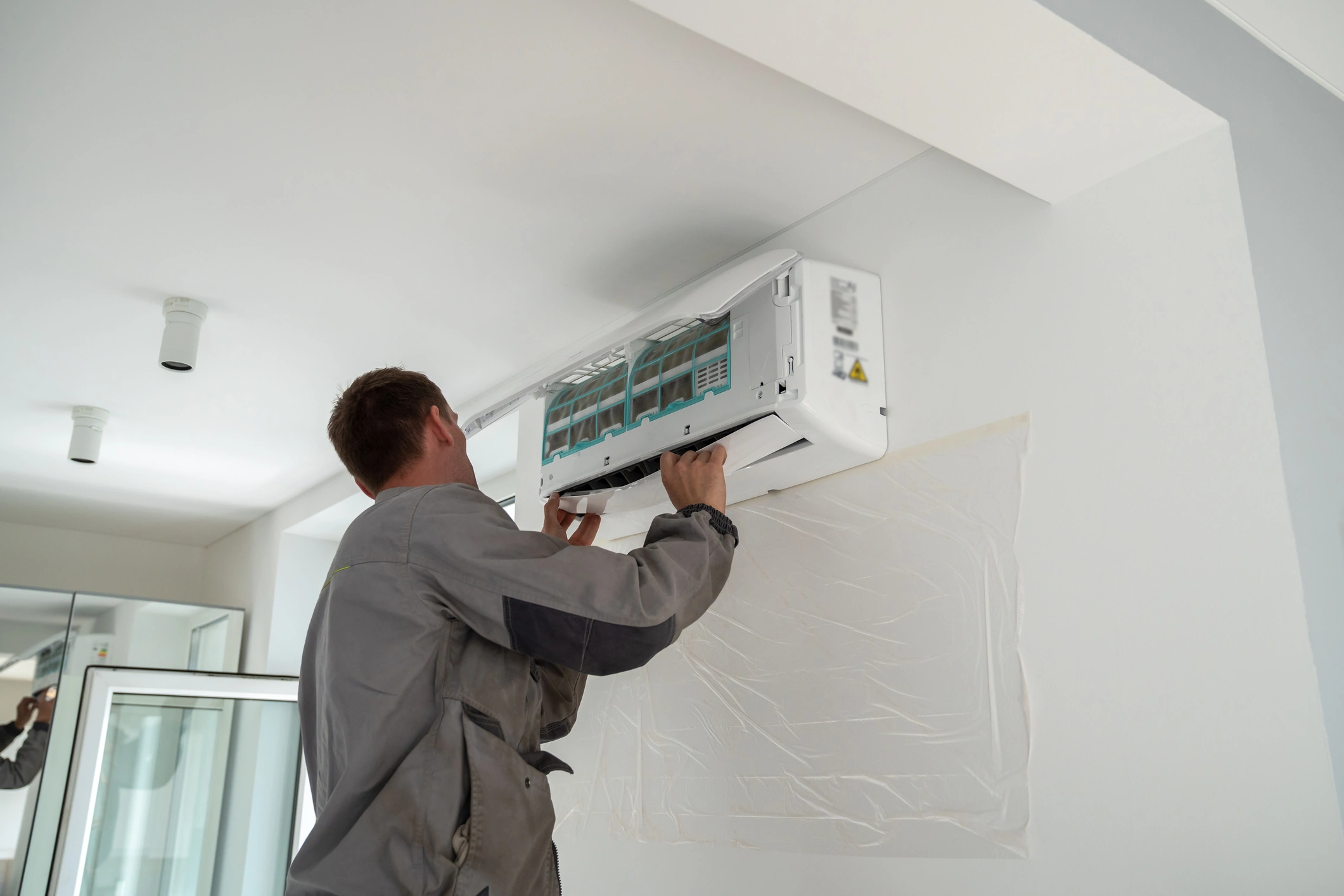
When your system malfunctions, you need a defined process that eliminates guesswork. We follow a strict protocol to ensure the repair is done correctly the first time. This systematic approach protects your equipment and ensures that the root cause is addressed, rather than just the symptom.
Initial Assessment and Error Code Reading
The technician begins by inspecting the indoor unit for visible signs of distress, such as icing, water leaks, or flashing lights.
Most mini-splits communicate via error codes. We interpret these codes to understand if the issue is a communication error, a sensor fault, or a mechanical lock-out.
We check the thermostat and remote control functionality to rule out simple setting errors.
System Isolation and Electrical Testing
Power is safely disconnected to test internal components.
Technicians inspect the main control board (PCB) for burn marks or blown fuses, which are common after electrical storms.
Voltage and resistance are measured at the compressor and fan motors to ensure they are within manufacturer specifications.
Refrigerant and Airflow Analysis
Gauges are attached to measure operating pressures and line temperatures.
We check for refrigerant leaks using electronic leak detectors, paying close attention to flare connections which are common leak points.
Airflow is measured across the evaporator coil to ensure the blower wheel is spinning at the correct RPM and moving sufficient air.
Execution of Repair
Once the problem is isolated, we present the solution.
Faulty parts such as thermistors, control boards, or fan motors are replaced with high-quality components.
If a leak is found, it is repaired, the system is pressure tested with nitrogen, and then recharged with the precise amount of refrigerant required by the factory weigh-in method.
Final Testing and Validation
The system is restarted and run in test mode.
We measure the "Delta T" (temperature difference) between the return air and supply air to verify cooling or heating capacity.
The condensate drain is water-tested to ensure it flows freely and does not back up.
Identifying When to Repair vs. Replace
Deciding between repairing a broken mini-split or investing in a new system is a financial and practical calculation. While our priority is always to repair your existing equipment, there are scenarios where sinking money into an aging unit yields diminishing returns. We provide the data you need to make an informed decision based on the age, condition, and repair cost of your specific unit.
Repair is the right choice when:
- The system is under ten years old and has been well-maintained.
- The cost of the repair is less than 50% of the cost of a new unit.
- The unit is still under the manufacturer’s parts warranty (typically 5 to 7 years, sometimes longer).
- The breakdown is a singular event, such as a failed sensor or a clogged drain, rather than a catastrophic compressor failure.
- You are planning to move soon and only need the system to function for the short term.
Replacement is the better investment when:
- The unit is over 12-15 years old and uses outdated refrigerant (such as R-22), which is expensive and difficult to source.
- The compressor has failed (grounded or locked rotor) and the warranty has expired.
- You have faced multiple breakdowns in the last two years, indicating that the internal components are reaching the end of their lifecycle.
- The estimated repair cost approaches or exceeds 50% of a replacement system’s value.
- You want to upgrade to a system with higher SEER ratings for better energy efficiency and lower monthly utility bills.
Common Mini-Split Failure Modes
Understanding what goes wrong can help you communicate issues effectively when you call for service. Mini-splits have unique failure modes compared to central air systems.
- Communication Errors: The indoor and outdoor units talk to each other constantly. If the wiring between them is compromised or a circuit board fails, the system will shut down to protect itself. This often manifests as a specific blinking light pattern.
- Drainage Issues: Because mini-splits are often mounted on walls, they rely on gravity or small pumps to remove condensate. If the line clogs with algae or the pump fails, water will overflow directly into your room.
- Refrigerant Leaks: Mini-splits operate on critical charges. Even a tiny leak can drastically reduce efficiency and cause the evaporator coil to freeze over.
- Inverter Board Failures: The inverter board controls the variable speed compressor. These sensitive electronics are susceptible to "dirty power" and voltage spikes, which can render the outdoor unit dead.
- Sensor Malfunctions: Thermistors monitor temperatures at various points in the system. If a sensor gives a false reading, the system may short cycle or refuse to turn on, thinking the room is already at the desired temperature.
Local Factors Affecting Your Mini-Split
Operating a mini-split in Thibodaux presents specific challenges due to the local climate and environmental conditions. Understanding these factors helps in both the diagnosis of current problems and the prevention of future ones.
- High Humidity Load: The humid subtropical climate puts immense strain on the dehumidification capabilities of your unit. Mini-splits run for longer cycles to pull moisture out of the air. This constant moisture exposure means the condensate drain lines are more prone to algae and mold buildup than in drier climates. Regular flushing of drain lines is a critical repair and maintenance task here.
- Tropical Storms and Power Surges: The region is vulnerable to tropical storms and hurricanes. These events often bring power fluctuations and lightning strikes. Mini-splits are heavily reliant on electronic circuit boards which are highly sensitive to voltage irregularities. We frequently see blown fuses and fried inverter boards following storm seasons. Installing surge protection is a recommended step during any major repair.
- Corrosion Risks: While not directly on the beachfront, the general humidity and environmental salinity can accelerate corrosion on the outdoor condenser coils. If the aluminum fins degrade, the unit cannot disperse heat effectively, leading to overheating and compressor stress.
- Pests and Insects: Local wildlife, including geckos, ants, and wasps, are often attracted to the electrical warmth of the outdoor unit. We frequently find that pests have shorted out control boards or chewed through sensor wires.
Why Specialized Service Matters
Not every HVAC technician is qualified to work on ductless systems. These units require a different set of tools and a different diagnostic approach than traditional central air conditioners. A general handyman or a technician who primarily works on standard split systems may miss the nuances of inverter technology, leading to misdiagnosis or improper repairs.
Martin's Heating & Air Conditioning technicians carry specific inventory on their trucks tailored to ductless repairs. This includes the correct flare nut wrenches to prevent leaks, cleaning bags for washing blower wheels in place, and the diagnostic computers required to interface with modern inverter boards. We do not guess; we test. The training required to service these units involves understanding complex electrical DC voltage conversion and proprietary communication protocols.
Choosing a specialized provider ensures that your warranty remains intact. Many manufacturers require proof that a licensed, qualified professional performed the repair work. Improper handling of refrigerant or electrical components by an unqualified person can void the manufacturer's warranty, leaving you liable for future part replacements. We ensure that every step of the repair adheres to the manufacturer’s strict engineering standards.
Restore Your Home Comfort Today
A broken mini-split disrupts your life, impacts your sleep, and threatens the air quality of your home. You do not have to endure the heat or the humidity while waiting for parts or unreliable service. We provide the technical expertise and the rapid response required to get your system running efficiently again.
Whether you are dealing with a water leak, a system that won't turn on, or a unit that simply isn't cooling, we have the solution. Trust Martin's Heating & Air Conditioning to deliver a repair that lasts.
Don't let a breakdown compromise your comfort—schedule your repair now.
Talk to a Local HVAC Expert
.avif)