Restore Your Home's Warmth With Immediate Heating Repair
Is your heater failing to keep up with the chilly, damp winter nights in Montegut, LA when you need it most? Don’t let a malfunctioning heater disrupt your comfort or compromise your family's safety; Contact us today to schedule immediate heating repair service.
When temperatures drop in Terrebonne Parish, a reliable heating system is not a luxury; it is a necessity. Cold snaps in our region bring a pervasive, humid chill that penetrates homes quickly if the heating unit goes offline. Martin's Heating & Air Conditioning understands that heating issues rarely happen at convenient times. You need a solution that addresses the root cause of the failure, ensuring your system performs efficiently throughout the season.
- Rapid response team available 24/7 to address your heating emergencies.
- Experienced technicians equipped to repair all major heating brands and models.
- Transparent pricing and flexible financing options to fit your budget.
Licensed and insured professionals ensure a hassle-free repair process with full warranty coverage.
Comprehensive Diagnostics and Immediate Repair Solutions
When you request service, the primary goal is to accurately identify why your system is failing and restore heat immediately. A heating system is a complex network of electrical components, fuel lines, airflow systems, and safety switches. Guesswork is not an option. Professional repair services begin with a thorough diagnostic assessment that goes beyond simply checking if the unit turns on.
Technicians arrive in fully stocked service vehicles, carrying a wide inventory of universal parts. This preparation is crucial for resolving issues in a single visit. The objective is to minimize downtime so you are not left waiting for parts while the temperature inside your home continues to drop. Whether you are dealing with a gas furnace that refuses to ignite or a heat pump that is blowing cold air, the focus is on a permanent fix rather than a temporary patch.
During the service visit, you can expect the following assessments:
- Safety Inspection: Verification that heat exchangers are intact and there are no carbon monoxide leaks.
- Electrical Analysis: Testing of capacitors, relays, and control boards to ensure proper voltage and amperage.
- Airflow Evaluation: Checking for blockages in filters or ductwork that cause the system to overheat and shut down.
- Ignition Testing: Ensuring pilot lights, hot surface igniters, or spark igniters are functioning correctly to start the heating cycle.
How the Heating Repair Process Works
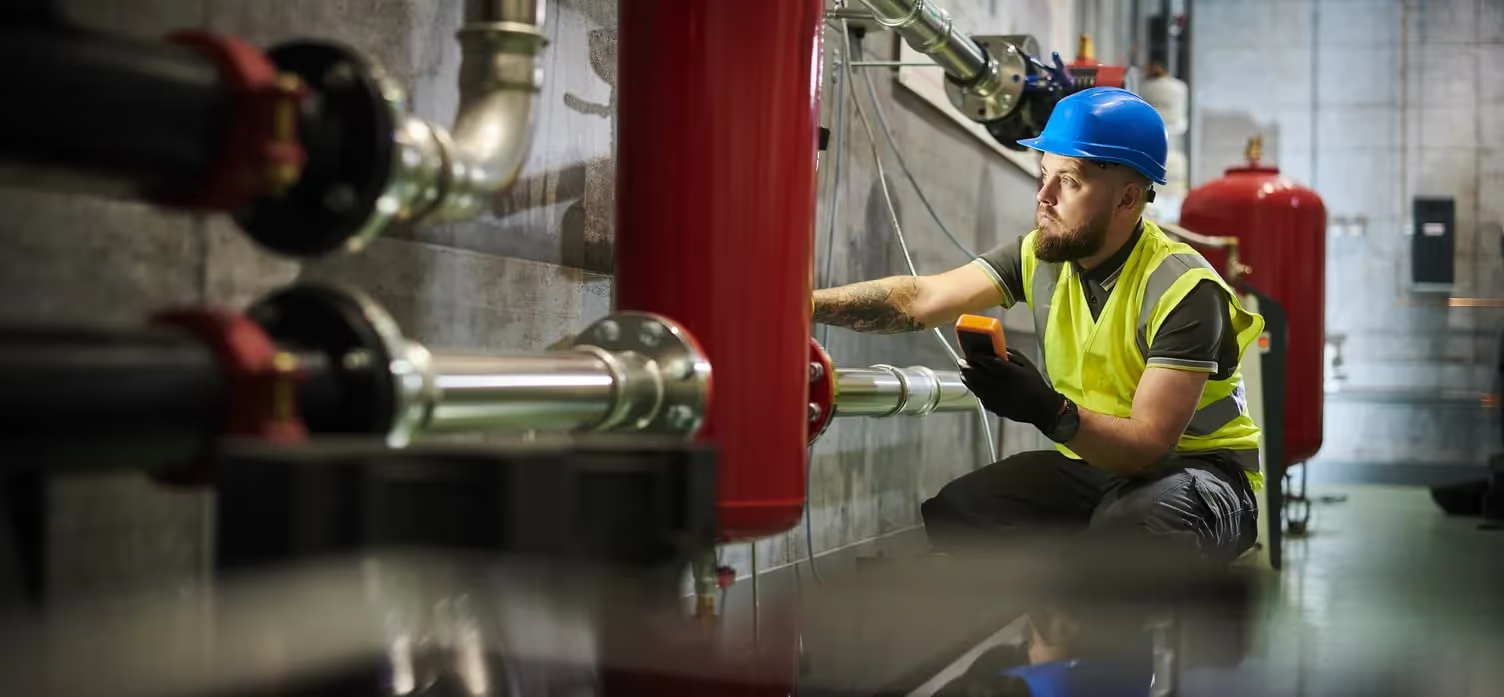
Navigating a heating breakdown can be stressful, especially during the height of winter. Understanding the process helps eliminate uncertainty. Professional service follows a structured, logical workflow designed to respect your time and property while delivering technical excellence.
- Scheduling and Dispatch: Upon contacting the service center, a request is logged, and the next available technician is dispatched to your location in Montegut. You receive clear communication regarding arrival windows so you are not stuck waiting all day.
- Arrival and Assessment: The technician arrives wearing identification and protective shoe covers to keep your home clean. They listen to your description of the problem—strange noises, smells, or lack of heat—and begin the diagnostic process.
- Upfront Explanation: Once the issue is identified, the technician provides a detailed explanation of the failure. You receive a clear, flat-rate quote for the repair before any work begins. There are no hidden fees or surprise charges at the end of the job.
- Execution of Repair: With your approval, the technician performs the necessary repairs using high-quality replacement parts. This may involve replacing a flame sensor, calibrating the thermostat, or unclogging a condensate drain line.
- System Testing: After the repair is complete, the system is run through a full heating cycle. The technician measures temperature differentials and airflow to verify that the unit is operating at peak efficiency.
- Final Walkthrough: The technician explains what was done, provides maintenance tips to prevent future issues, and ensures the work area is left exactly as it was found.
Identifying Common Heating System Failures
Heating systems generally give warning signs before they fail completely. Recognizing these symptoms early can prevent a minor repair from escalating into a catastrophic system failure that requires a full replacement. In the humid climate of Southern Louisiana, certain issues are more prevalent due to moisture levels and the intermittent use of heating systems.
Short Cycling
If your heater turns on and off frequently without reaching the set temperature, it is short cycling. This places immense strain on the blower motor and compressor (in heat pumps). Common causes include dirty air filters restricting airflow, a malfunctioning thermostat, or an oversized unit. Ignoring short cycling leads to inflated energy bills and premature component burnout.
Cold Air from Vents
Few things are more frustrating than a heater blowing cold air. For heat pumps, this might mean the unit is stuck in defrost mode or the reversing valve has failed. For gas furnaces, it often indicates an issue with the pilot light, thermocouple, or gas supply. If the burner does not ignite, the blower fan may still run, circulating unheated air throughout the house.
Unusual Noises
Heating systems should operate relatively quietly. Squealing sounds often indicate a slipped or worn blower belt. Grinding or scraping noises suggest dry motor bearings that require immediate lubrication or replacement. Popping or banging sounds in the ductwork may be due to thermal expansion, but loud booms from a furnace could indicate delayed ignition—a serious safety hazard that requires immediate professional attention.
Uneven Heating
If some rooms are freezing while others are sweltering, the issue often lies in the distribution system. Leaky ductwork can result in the loss of up to 30% of your generated heat before it reaches your living space. Zone control issues or blocked vents can also contribute to inconsistent comfort levels across the home.
Repair vs. Replacement: Making the Right Decision
Homeowners often face the difficult decision of whether to repair an aging unit or invest in a new system. While repair is usually the most cost-effective option for minor issues, there comes a point where sinking money into an old system is no longer unparalleled.
Technicians provide honest assessments based on the condition of your specific unit. The decision generally relies on four key factors:
- Age of the System: The average lifespan of a heat pump or furnace is between 10 and 15 years. If your system is nearing or exceeding this age range, major repairs may not yield a good return on investment.
- Frequency of Breakdowns: If you have required multiple repairs in the last two seasons, the system is likely becoming unreliable. The cumulative cost of frequent service calls can quickly approach the price of a modern, energy-efficient replacement.
- The 50% Rule: A general industry standard suggests that if the cost of the repair equals 50% or more of the value of the system (or the cost of a new one), replacement is the financially sounder choice.
- Safety Concerns: If a gas furnace has a cracked heat exchanger, it poses a carbon monoxide risk. In such cases, repair is rarely an option; replacement is necessary for the safety of the household.
- Energy Efficiency: Older units often operate at significantly lower efficiency (AFUE or HSPF ratings) than modern standards. Upgrading can sometimes offset the monthly cost through utility savings, whereas repairing an inefficient unit keeps energy bills high.
Martin's Heating & Air Conditioning technicians assist in weighing these variables, providing data rather than pressure, so you can make the decision that best suits your long-term plans and budget.
Local Considerations for Montegut Homeowners
Operating a heating system in Montegut presents unique challenges compared to drier, colder climates. The humid subtropical environment impacts how heating systems perform and deteriorate over time.
Humidity and Moisture Control
Even in winter, Louisiana experiences high humidity. When a heater runs, it alters the relative humidity in the home. Heat pumps, in particular, must manage moisture effectively. If ductwork is located in a crawlspace or unconditioned attic, the temperature difference between the warm air inside the ducts and the cold, damp air outside can cause condensation. This sweating can lead to water damage or mold growth if ducts are not properly insulated and sealed.
The "Dirty Sock" Syndrome
Because our winters are mild, homeowners often switch between heating and cooling modes. When a heat pump switches from cooling (where coils are wet) to heating, bacterial growth on the coils can produce a foul, musty odor known as "dirty sock syndrome." Professional cleaning and UV light installation are often required to resolve this specific regional issue.
Hurricane Season Aftermath
The hurricane season, running through November, often leaves unseen damage that impacts winter heating. Power surges or rapid power cycling during storms can damage sensitive electronic control boards. Additionally, outdoor units may have accumulated debris or suffered corrosion from salt spray and heavy rains. A pre-season inspection is vital to ensure storm impacts haven't compromised the system's ability to heat.
Permits and Regulations
Repairs involving gas lines or significant electrical work in Montegut must adhere to local building codes and safety regulations. Hiring certified professionals ensures that all work is compliant with Louisiana state codes, protecting your home’s value and insurance validity.
Why Professional Service Matters
Attempting DIY repairs on heating systems is dangerous and often voids manufacturer warranties. Modern HVAC equipment relies on precise calibration. A variance of a few ounces of refrigerant or a slightly misaligned sensor can drastically reduce efficiency.
Choosing professional service ensures that every component is tested against manufacturer specifications. Technicians bring diagnostic tools that are not available to the average consumer, such as combustion analyzers and micron gauges. This level of precision ensures that the repair addresses the root cause, not just the symptom.
Furthermore, professional service guarantees access to OEM (Original Equipment Manufacturer) parts. Generic parts may fit, but they often lack the durability and precise engineering of the components designed specifically for your brand of equipment. Using the correct parts prolongs the life of the system and maintains its safety certifications.
Trustworthy Heating Solutions for Your Home
Your home should be a sanctuary against the cold, regardless of how low the temperature drops outside. When your heating system falters, you need a partner who values your comfort as much as you do. From minor electrical fixes to major component replacements, the goal is always the same: restoring safe, efficient warmth to your living space as quickly as possible.
We prioritize clear communication, technical accuracy, and respect for your home. By combining local knowledge of Montegut's climate challenges with industry-leading technical training, Martin's Heating & Air Conditioning delivers results that stand the test of time. Do not let a cold house compromise your well-being.
Take control of your comfort today—reach out now to schedule your expert heating repair service.
Talk to a Local HVAC Expert
.avif)