House Rewiring in Galliano, LA
Looking for reliable house rewiring in Galliano? Contact Martin’s Heating & Air Conditioning for safe electrical upgrades meeting modern standards.
Solve Your Home’s Electrical Issues Safely and Efficiently
Outdated electrical systems pose significant fire risks and often fail to keep up with the heavy power demands of modern appliances, leaving your property vulnerable to safety hazards. Contact us immediately to schedule an assessment or inquire about our financing options to modernize your electrical system today.
Martin's Heating & Air Conditioning provides expert house rewiring services tailor-made for the unique climate challenges found in Galliano. Older homes in the area frequently rely on wiring standards that were never designed to handle today’s high-amperage HVAC systems, electric vehicles, or smart home grids. Ignoring signs of electrical failure—such as flickering lights, warm outlets, or burning smells—can lead to catastrophic property damage. We address the root cause of these issues by completely replacing compromised infrastructure with code-compliant, durable materials:
- Ensure strict compliance with Louisiana’s current electrical codes.
- Reduce the risk of electrical fires with up-to-date, grounded copper wiring.
- Available 24/7 for emergency rewiring needs to keep your home safe.
Licensed and insured with straightforward financing options available.
Comprehensive House Rewiring Scope
When you commit to a house rewiring project, you are investing in a complete overhaul of your home’s electrical circulation system. This is not merely a repair service where a technician wraps tape around a frayed wire; it is a systematic removal and replacement of dangerous infrastructure. In Galliano, where high humidity and frequent storms accelerate corrosion, ensuring every connection is secure is a priority.
The scope of a full rewiring project typically involves removing accessible old wiring and fishing new, non-metallic sheathed cable (Romex) through walls, ceilings, and floor joists. This process updates your home from two-wire systems, which lack a ground wire, to a three-wire system. Grounding is essential for diverting excess electricity away from your appliances and family members during a surge or fault. Without a ground wire, power surges have nowhere to go but through your expensive electronics or, in worst-case scenarios, through a person.
The service also encompasses the replacement of the main service panel if the current unit cannot handle the increased load of a modernized system. Many older homes operate on 60-amp or 100-amp service, which is insufficient for modern living. Upgrading to a 200-amp service allows for simultaneous use of high-draw appliances like air conditioners, dryers, and electric ovens without tripping breakers. Furthermore, the installation includes new receptacles, switches, and device boxes. We replace loose, worn-out outlets that no longer grip plugs extensively, ensuring that arcing—a leading cause of electrical fires—does not occur inside your walls.
Specialized circuits are also installed during this phase. Modern codes require Dedicated circuits for heavy appliances to prevent overloading. This means your refrigerator, microwave, and laundry machines will operate on their own protected lines. Additionally, we install Ground Fault Circuit Interrupters (GFCIs) in wet areas like kitchens and bathrooms, and Arc Fault Circuit Interrupters (AFCIs) in bedrooms and living areas to detect dangerous electrical arcs and cut power before a fire starts.
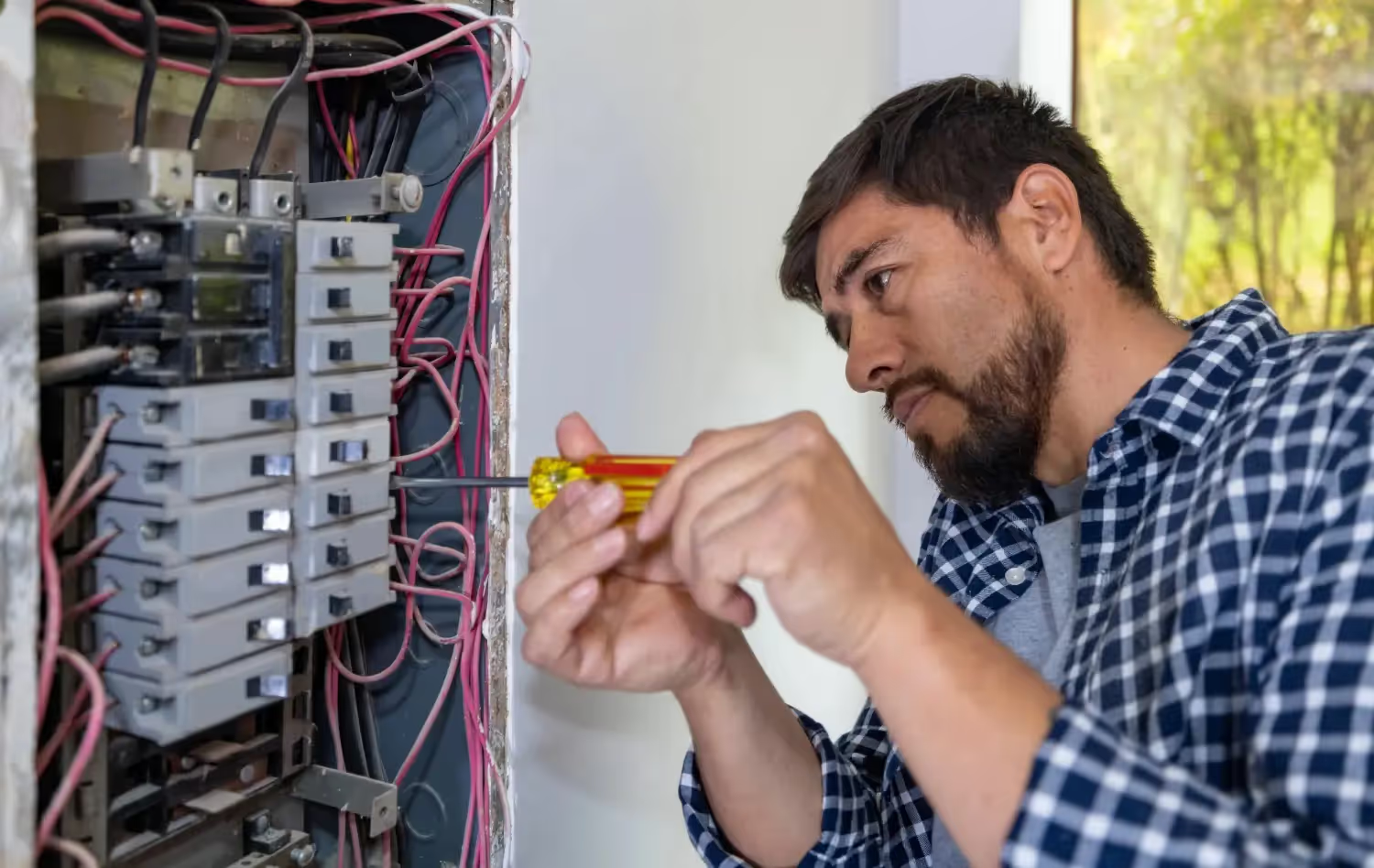
The Rewiring Installation Process
Understanding the workflow of a whole-home rewire helps homeowners prepare for the project and reduces anxiety regarding the timeline and invasiveness of the work. We prioritize a methodical approach that respects your property while adhering to strict safety protocols.:
- The process begins with a detailed mapping of your current electrical layout. Technicians identify all circuits, outlets, and switches, and plan the most efficient routes for new wiring. This planning phase is critical for minimizing the need to cut into drywall.
- Next, the crew prepares the work area. Furniture and flooring are covered to protect them from dust and debris. Power may be shut off to specific sections of the home or the entire property depending on the phase of work, though temporary power solutions are often discussed beforehand.
- The removal and fishing phase follows. Technicians carefully disconnect old wiring. In many cases, old wire is left abandoned in place inside the walls if removing it would cause excessive damage, provided it is fully disconnected and rendered safe. New copper wiring is then "fished" through wall cavities. This technique utilizes flexible rods and localized access holes to pull wire from the attic or crawlspace to the outlet locations, significantly reducing the amount of drywall patching required later.
- Once the new cabling is in place, the device installation occurs. This involves connecting the new wires to new outlets, switches, and fixtures. Technicians ensure that every connection is tight and that polarity is correct.
- If a panel upgrade is part of the project, the main service panel is replaced and grounded to the water main or a dedicated grounding rod driven into the earth. This connects the internal wiring to the external power supply provided by the utility company.
- Finally, a rigorous testing phase is conducted. Every circuit is energized and tested for continuity, proper voltage, and grounding. Technicians check that all GFCIs and AFCIs trip correctly. Only after the system passes all internal inspections is the site cleaned up and returned to the homeowner.
Determining When Full Replacement Beats Repair
Homeowners often hesitate to authorize a full rewire due to the scale of the project, hoping that minor repairs will suffice. However, there are specific electrical conditions where repair is merely a temporary bandage on a critical wound. Recognizing these decision criteria is essential for the long-term safety and insurability of your home in Galliano.
Replacement is mandatory when the insulation on your existing wires begins to crumble. Much of the wiring installed mid-century utilizes cloth or rubber insulation that dries out and becomes brittle over time. When this insulation flakes off, it exposes bare live wires inside your walls. No amount of repair can fix deteriorating insulation across an entire house; the only safe solution is total replacement with modern thermoplastic-coated wire.
You should also opt for replacement if your home utilizes aluminum wiring. Prevalent in homes built in the 1960s and 70s, aluminum wiring expands and contracts with heat differently than copper. This thermal movement causes connections to loosen over time, creating gaps where electricity can arc and start a fire. While pigtailing (adding copper ends to aluminum wires) is a possible mitigation, insurance companies often demand full replacement due to the inherent risks associated with aluminum branches.
If you are planning a major renovation or adding an addition to your home, rewiring is often the most logical step. Opening walls for construction provides the perfect opportunity to update electrical infrastructure without the added cost of demolition and repair solely for the electrical work. Additionally, if your current system utilizes knob-and-tube wiring, replacement is not optional; it is a necessity. Knob-and-tube lacks a ground wire and is unrated for the thermal insulation used in modern attics, making it a severe fire hazard that most insurance carriers will refuse to cover.
Local Electrical Considerations
Electrical work does not happen in a vacuum; it is heavily influenced by the local environment and regulatory landscape. In Galliano, the humid subtropical climate presents specific challenges that dictate the materials and methods used in house rewiring:
- Humidity and Corrosion Protection: The high moisture levels in this region can accelerate the corrosion of electrical panels and contacts. We utilize corrosion-resistant materials and ensure that all exterior service entry cables are sealed tightly against water intrusion. This prevents moisture from wicking down the cable and entering the main breaker panel, a common cause of rust and failure in Louisiana homes.
- Hurricane Preparedness and Generator Integration: Given the vulnerability to tropical storms and hurricanes from June to November, rewiring projects often include provisions for standby generator integration. Installing a manual transfer switch or an interlock kit during the rewiring process is more cost-effective than adding it later. This ensures that when the grid goes down, you can safely power essential circuits without back-feeding the utility lines.
- Permitting and Code Compliance: Electrical work of this magnitude generally requires permits from the local building department or parish authority. This ensures that the work is reviewed by a third-party inspector for safety. Compliance is not just about avoiding fines; it is about ensuring that if you ever sell your home, the electrical system passes inspection without issue.
- Utility Coordination: Upgrading your service amperage often requires coordination with the local utility provider to upgrade the service drop (the wire from the pole to your house). We handle the logistics of disconnecting and reconnecting power to ensure the transition is seamless.
Martin's Heating & Air Conditioning understands these local nuances and ensures that every project meets both the National Electrical Code (NEC) and local amendments specific to the region.
Why Professional Execution Matters
The distinction between a safe, efficient electrical system and a hazardous one lies in the quality of the installation. Professional execution focuses on load calculation and circuit balancing, ensuring that no single breaker is overwhelmed by normal household activity. This technical precision prevents the annoyance of tripping breakers when you plug in a vacuum cleaner while the microwave is running.
Professional rewiring also accounts for future expansion. A qualified electrician does not just wire for today; they install a panel with room for future growth, whether that be for an electric vehicle charging station or a new hot tub. We ensure that the load calculations reflect both current needs and potential future additions, saving you the cost of a second upgrade down the line.
Safety certification is another critical differentiator. Upon completion of a professional rewire, you receive documentation that validates the work. This proof of professional installation is often required by home insurance providers to secure lower premiums or to maintain coverage on older properties. It also serves as a valuable asset during the resale of a home, providing potential buyers with confidence in the property's infrastructure.
DIY electrical work or hiring unlicensed handymen for rewiring projects carries immense liability. Improperly grounded circuits, reversed polarity, or unsecured connections can lie dormant for months before causing a fire. Professional services carry the necessary liability insurance and offer warranties on workmanship, transferring the risk away from the homeowner and onto the provider.
Secure Your Home’s Electrical Future
Your home’s electrical system is the invisible workforce that powers your daily life. When that system is compromised by age, weather, or outdated materials, the safety of your property is at stake. A complete house rewiring project eliminates these risks, provides a stable power supply for modern electronics, and ensures compliance with all safety regulations.
Don't wait for a smoke detector to alert you to a problem that could have been prevented. Martin's Heating & Air Conditioning is ready to upgrade your home with the safety and reliability you deserve.
Take the first step toward a safer home; contact us now to discuss your rewiring project.
Talk to a Local HVAC Expert

.avif)