Eliminate Humidity and Cooling Failures with Expert HVAC Installation
Battling Montegut's intense humidity and heat can be tough on any home infrastructure, but a failing air conditioner makes it unbearable. Replace or upgrade your HVAC system today to ensure your comfort, protect your home from mold risks, and significantly decrease your energy bills. Call us now or explore our financing options to start your installation immediately.
- Experience same-day consultation or rapid installation to quickly enjoy a cooler, more comfortable home environment.
- Get professional, compliant installation ensuring your system runs at peak efficiency despite the local climate challenges.
- Benefit from extended warranties and manufacturer rebates that protect your investment and lower upfront costs.
Martin's Heating & Air Conditioning is fully licensed, offers extensive labor and parts warranties, and provides flexible financing options that make your investment stress-free and accessible.
Comprehensive HVAC Replacement Services Available Today
When you schedule an installation, you are not simply purchasing a piece of machinery; you are investing in a complete environmental control system for your property. The equipment available today offers vastly superior technology compared to units manufactured even ten years ago. Modern systems are designed to handle the specific latent heat loads found in Louisiana, actively removing moisture from the air while cooling the space.
Your installation service encompasses a full evaluation and replacement of critical components. This includes the outdoor condenser unit, which expels heat from your home, and the indoor air handler or furnace, which circulates the conditioned air. We also replace the evaporator coil, the component responsible for absorbing heat and humidity. If your refrigerant lines are compatible, they are flushed and pressure-tested; otherwise, new copper line sets are installed to ensure no contaminants compromise the new compressor.
Martin's Heating & Air Conditioning ensures that every installation includes a modernized thermostat interface, allowing you better control over your indoor climate. We also inspect the existing ductwork to identify leaks or insulation failures that could undermine the efficiency of your new unit. If the platform or pad where the outdoor unit sits is unlevel or deteriorated, we replace it with a composite, weather-resistant pad designed to withstand ground settling and vibration.
In Montegut, where salt air and high moisture levels are common, we prioritize equipment with enhanced corrosion resistance. This might include coated coils or composite base pans that do not rust. The goal is to provide a turnkey solution where the old, inefficient system is removed, and a high-performance system is integrated seamlessly into your home, ready to combat the heat immediately.
Detailed Installation Process: Step-by-Step
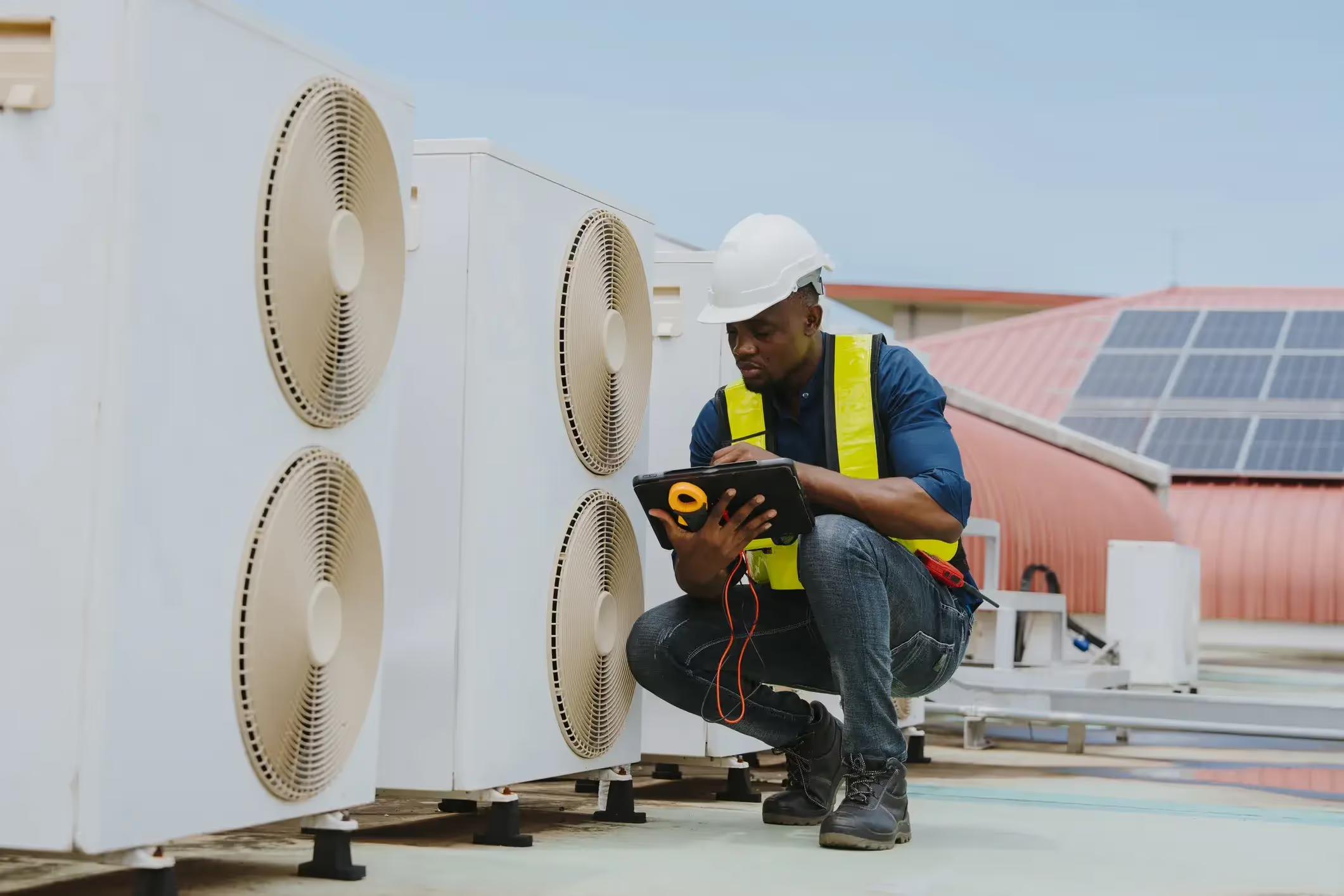
A professional installation follows a rigorous protocol to ensure longevity and manufacturer warranty compliance. Skipping steps or rushing the process often leads to early system failure, particularly in hot, humid climates where the equipment runs constantly. Our technicians follow a precision-based approach to ensure every connection is secure and every setting is calibrated to the specific needs of your home structure.
Load Calculation and Sizing:
- Before any equipment is moved, a Manual J load calculation is performed. This determines the exact cooling and heating capacity required for your specific square footage, insulation levels, window orientation, and local weather patterns.
- Oversized units cycle too frequently, failing to dehumidify the air, while undersized units run continuously without reaching the set temperature. Correct sizing is the foundation of efficiency.
Site Preparation and Protection:
- Technicians lay down drop cloths and floor protection to ensure your home remains clean throughout the process.
- Safety disconnects are turned off, and electrical circuits are verified dead before work begins to ensure safety.
Refrigerant Recovery and Removal:
- Existing refrigerant is not vented into the atmosphere; it is legally recovered into approved cylinders using a recovery machine, adhering to EPA regulations.
- The old condenser and air handler are disconnected from the electrical supply, drain lines, and ductwork, then carefully removed from the property for recycling and proper disposal.
Equipment Positioning and Connection:
- The new indoor unit is positioned and leveled to ensure proper drainage of condensate water, which is vital for preventing water damage.
- The outdoor unit is placed on a new hurricane-rated pad, ensuring it is level and elevated enough to avoid standing water during heavy rains.
- Copper refrigerant lines are brazed using nitrogen purging. This technique prevents oxidation inside the pipes, which can clog the sensitive metering devices in modern high-efficiency units.
Electrical and Drainage Integration:
- High-voltage wiring is connected to the disconnect box and the unit, ensuring wire gauges meet the manufacturer’s amperage requirements.
- Low-voltage control wiring is connected to the thermostat and safety switches.
- Condensate drain lines are reconstructed with P-traps and safety float switches. These switches automatically shut off the system if the drain clogs, preventing water from overflowing into your ceiling or floors.
System Commissioning and Testing:
- The system is pressure-tested with nitrogen to guarantee there are no leaks in the brazed joints.
- A deep vacuum is pulled on the refrigerant lines to remove moisture and non-condensables, which is critical for the longevity of the compressor.
- The system is charged with the precise amount of refrigerant based on subcooling and superheat measurements.
- Technicians verify airflow (static pressure) across the coil to ensure the blower motor is moving the correct volume of air.
When to Replace vs. Repair Your HVAC System
Deciding between another repair and a full system replacement is a financial calculation based on the age of the unit, the cost of the repair, and future reliability. In the HVAC industry, we often look at the "50% Rule." If the cost of the repair approaches 50% of the value of the system, replacement is the smarter economic choice. However, other critical factors dictate when a unit has reached the end of its viable life.
Age of the Equipment:
- Most air conditioners and heat pumps have a lifespan of 10 to 15 years. If your unit is over 12 years old and requires a major repair, investing money into it is rarely advisable. Technology has advanced significantly, and older units are prone to cascading failures where one part breaks shortly after another.
Phase-Out of R-22 Refrigerant:
- If your system was manufactured before 2010, it likely uses R-22 (Freon), which has been phased out due to environmental regulations. As supply dwindles, the cost of R-22 has skyrocketed. Repairing a leak in an R-22 system is often cost-prohibitive compared to installing a modern system that uses R-410A or newer, more efficient refrigerants.
Compressor Failure:
- The compressor is the heart of the system. If it fails, the cost of replacement parts and labor is substantial. On an out-of-warranty unit, a compressor failure is a definitive signal to replace the entire system rather than patching an old machine.
Cracked Heat Exchanger:
- For systems with gas heating, a cracked heat exchanger is a serious safety hazard that can leak carbon monoxide into the home. This failure requires immediate replacement of the furnace or the entire system to ensure household safety.
Rising Energy Bills:
- As components wear out, motors and compressors draw more amperage to do the same amount of work. If you notice a steady increase in your electric bill despite normal usage, your system’s efficiency has degraded. upgrading to a high-SEER (Seasonal Energy Efficiency Ratio) unit can lower monthly cooling costs by 20% to 40%.
Inconsistent Temperatures and Humidity:
- If some rooms are freezing while others are hot, or if your home feels sticky and clammy despite the AC running, the system has lost its capacity to balance the load. In our region, humidity control is just as important as temperature control. A new system restores that balance.
Local Installation Factors for Montegut Homeowners
Installing HVAC equipment in Montegut requires adherence to specific protocols due to the regional geography and climate. Standard installation practices often fail here because they do not account for the high water table, salt exposure, and hurricane risks associated with Terrebonne Parish. Ignoring these local factors can lead to code violations, rejected insurance claims, and premature equipment corrosion.
Hurricane Codes and Wind Ratings:
- Equipment installed outdoors must be secured to withstand hurricane-force winds. This involves using specific metal tie-down straps or brackets anchored directly into the concrete pad. During a storm, unsecured units can become dangerous projectiles or tip over, severing refrigerant lines and electrical connections. We ensure all outdoor units meet local wind load requirements.
Flood Elevation and Pad Placement:
- Given the potential for flooding and storm surges, condenser units often need to be elevated on stands or higher platforms rather than sitting directly on the ground. This protects the electrical components and compressor from water intrusion during heavy downpours or tropical weather events.
Humidity and Mold Prevention:
- The ambient humidity in this area is consistently high. Systems must be configured with appropriate fan speeds to maximize moisture removal. We often recommend two-stage or variable-speed compressors for this region because they can run at lower speeds for longer periods, extracting more humidity without overcooling the space.
Permitting and Inspections:
- Replacement of HVAC equipment requires a mechanical permit to ensure the work meets safety codes. Unpermitted work can be a liability when selling your home. We handle the permitting process, ensuring that the wire sizing, breaker ratings, and gas connections (if applicable) pass inspection.
Electrical Infrastructure:
- Older homes in the area may have outdated electrical panels. Modern high-efficiency systems often have different amperage requirements than older units. We verify that your current electrical service can handle the new equipment or recommend necessary upgrades to the disconnect box or breaker panel.
Differentiators: Why Professional Execution is Critical
The most important day in the life of your air conditioner is the day it is installed. Industry studies suggest that a significant percentage of HVAC systems are installed incorrectly, reducing their efficiency by up to 30%. Selecting a provider who prioritizes technical precision over speed ensures that you get the full SEER rating you paid for and that the manufacturer honors the warranty.
Ductwork Integrity Analysis:
- Connecting a new, high-performance unit to leaking or collapsed ductwork is a waste of money. We assess the air distribution system to ensure that the cooled air actually reaches your living spaces rather than leaking into the attic or crawlspace. Sealing or modifying the plenum is often necessary to handle the airflow of modern air handlers.
Static Pressure Verification:
- Just like blood pressure in the human body, an HVAC system operates within a specific pressure range. If the static pressure is too high, the blower motor will fail prematurely. We measure and adjust ductwork restrictions to keep static pressure within the manufacturer's design specifications.
Warranty Registration and Support:
- Equipment manufacturers require proof of installation by a licensed contractor to validate warranties. We handle the registration of your equipment, ensuring you have full coverage for parts (often 10 years) and providing our own labor warranties to cover the workmanship.
Proper Refrigerant Charging:
- "Beer can cold" is not a measurement. Modern systems require precise refrigerant charging using subcooling and superheat calculations. An improper charge reduces cooling capacity and increases electricity usage. We use digital gauges to dial in the charge to the exact ounce required.
Call Us Now
Your home comfort relies on more than just hardware; it relies on the skill of the hands installing it. Martin's Heating & Air Conditioning delivers the technical expertise required to combat the Louisiana heat, ensuring your new system provides reliable cooling for years to come. Do not wait for a total system collapse during the peak of summer.
Secure your comfort and efficiency today—contact us to schedule your HVAC replacement consultation.
Talk to a Local HVAC Expert

.avif)