EV Chargers in Mathews, LA
Install a Level 2 EV charger in your Mathews home. Speedy charging, reduces range anxiety. Contact us to schedule installation or learn about financing.
Need a Reliable Charge Without the Wait?
Struggling to locate EV charging stations in Mathews that are open when you need them or tired of waiting days for your vehicle to charge on a standard wall outlet? Whether you have just purchased an electric vehicle or need a faster solution for your daily commute, relying on public infrastructure or slow trickle charging often leads to range anxiety and schedule disruptions. Contact us to schedule your installation assessment or ask about available financing options today.
We provide comprehensive installation services that transform your garage or driveway into a high-speed fueling station.
- Gain quick access to full battery power with Level 2 charging stations installed directly at your residence.
- Eliminate the reliance on variable public pricing and availability by securing a dedicated power source.
- Ensure compatibility with all major vehicle makes and models through versatile connector types and amperage settings.
All installations are fully compliant with local electrical codes and safety standards to protect your vehicle and your home’s electrical system.
Comprehensive EV Charger Installation Services
Moving from a standard 120-volt outlet to a dedicated Level 2 charging station fundamentally changes the electric vehicle ownership experience. Most EV owners in Mathews quickly realize that the "emergency" cable provided with the car, often delivering only 3 to 5 miles of range per hour of charging, is insufficient for daily driving needs. Our service focuses on upgrading your electrical infrastructure to support higher voltage and amperage, drastically reducing charge times.
We specialize in hardwired station installations and NEMA 14-50 outlet installations. A hardwired unit connects directly into your electrical panel, offering a cleaner look, better weather resistance for outdoor applications, and higher amperage limits for faster charging. Alternatively, installing a high-voltage outlet offers flexibility, allowing you to plug in a portable charging unit or easily swap out equipment in the future without calling an electrician.
Martin's Heating & Air Conditioning handles the complexities of load calculation and equipment selection. Every home has a unique electrical footprint. Older homes may require a service panel upgrade to handle the additional load of an EV charger, while modern homes might only need a new dedicated circuit. We evaluate your current amperage capacity to ensure that adding a charger does not trip breakers when your air conditioning or dryer runs simultaneously.
Our services cover a wide array of charging equipment options, including:
- Smart Chargers: Units with Wi-Fi connectivity that allow you to monitor charging status, schedule sessions for off-peak utility rates, and track energy usage via a smartphone app.
- Variable Amperage Units: Chargers that can be adjusted to match the available capacity of your electrical panel, ranging from 16 amps up to 50 or even 80 amps.
- Outdoor-Rated Equipment: Weatherproof stations designed to withstand the humidity and precipitation common in Louisiana, ensuring safety even when installed on an exterior wall.
The Installation Process: From Assessment to Power Up
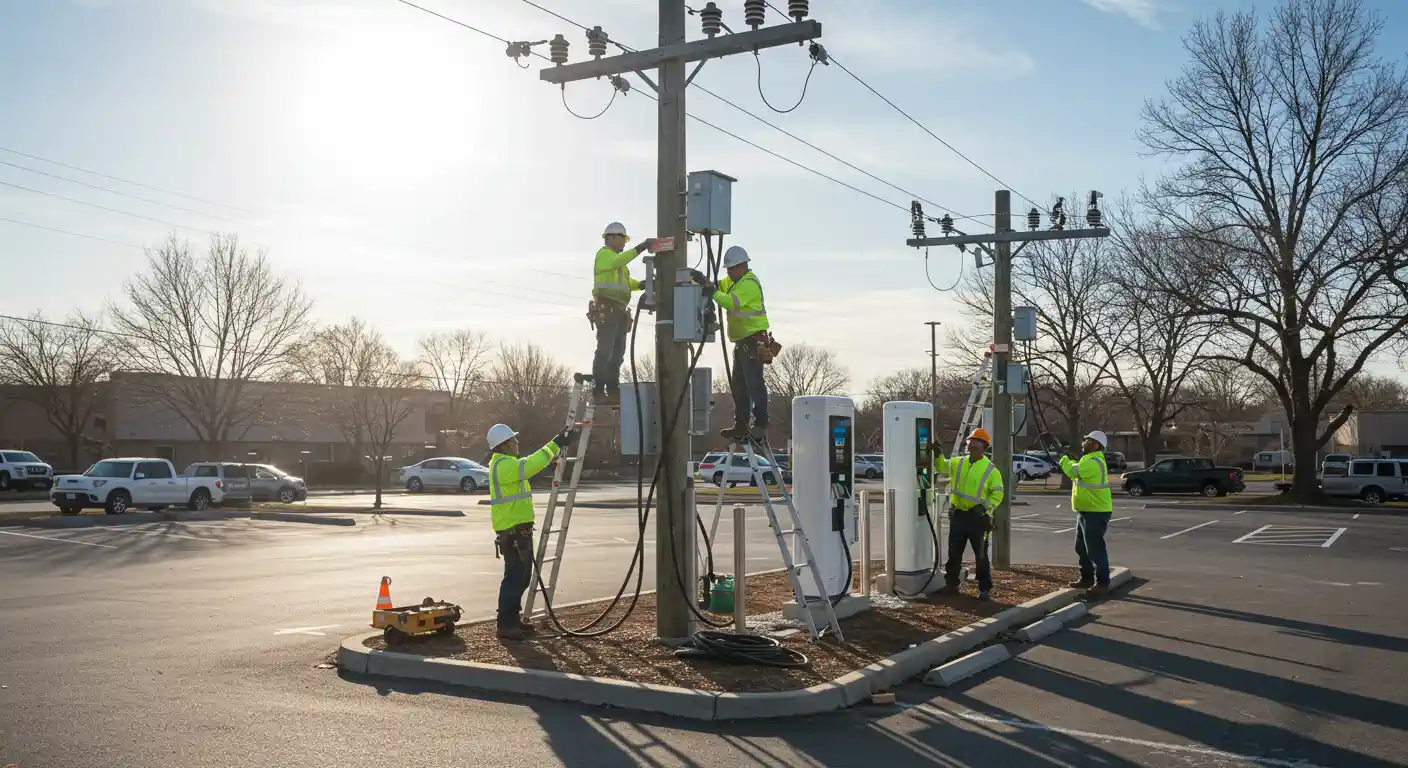
A professional installation is more than just connecting wires; it is a systematic process designed to ensure safety, efficiency, and longevity. We follow a strict protocol to verify that your home is ready for the high continuous load that electric vehicle charging demands.
- Site Assessment and Load Calculation: The process begins with a thorough evaluation of your electrical panel. We calculate the existing load of your home’s appliances and lighting to determine how much spare capacity is available. This step is critical to prevent overloading your main breaker. If your panel is at capacity, we can discuss options such as a service upgrade or a load management system that allows the charger to share power with other appliances safely.
- Permitting and Code Compliance: Electrical work of this magnitude requires adherence to the National Electrical Code (NEC) and local regulations in Mathews. We handle the acquisition of necessary electrical permits before work begins. This ensures that the installation is recognized as legal and safe, which is vital for insurance purposes and future home resale value.
- Circuit Installation and Wiring: We run a dedicated 240-volt circuit from your main panel to the installation location. This involves running heavy-gauge copper or aluminum wiring through conduit or behind walls, depending on the layout of your garage or parking area. The gauge of the wire is strictly matched to the amperage of the charger to prevent overheating and voltage drop.
- Mounting and Connections: The charging unit or receptacle is securely mounted to the wall. For outdoor installations, we utilize watertight fittings and NEMA-rated enclosures to protect connections from moisture and debris. The final connections are torqued to manufacturer specifications to ensure a solid electrical bond.
- Testing and Commissioning: Once installed, we energize the circuit and perform rigorous testing. We verify voltage levels, check for ground faults, and test the charger with your vehicle or a simulator to ensure it initiates a charge correctly. We also assist with setting up any smart features, such as connecting the unit to your home Wi-Fi network.
When to Upgrade: Level 1 vs. Level 2 Charging
Deciding whether to stick with the standard Level 1 cord or invest in a Level 2 installation comes down to your driving habits and the value of your time. Level 1 charging utilizes a standard household outlet and is often referred to as "trickle charging." While it requires no installation, it is incredibly slow. If you deplete your battery significantly during the day, a Level 1 charger will not be able to replenish it overnight. This deficit creates a cycle where the battery never reaches full capacity, limiting your range for the following day.
Level 2 charging creates a bridge between the convenience of home and the speed of public infrastructure. By utilizing 240 volts, these stations can charge an EV roughly 3 to 7 times faster than a standard outlet. For most drivers in Mathews, this means plugging in at night and waking up to a 100% charged battery every morning, regardless of how much you drove the previous day.
You should consider an immediate upgrade if you identify with the following situations:
- Daily Commute Exceeds 40 Miles: If you drive more than the minimal range a Level 1 charger can recover in 12 hours, you will constantly operate at a deficit.
- Multiple EVs in the Household: Sharing a single slow charger between two vehicles is logistically difficult. A Level 2 charger allows for quick top-ups, making it easier to rotate vehicles.
- Time-of-Use Utility Rates: If your utility provider offers cheaper electricity rates at night, a fast charger allows you to fill the battery entirely within that narrow low-cost window, saving money on fuel costs over time.
- Preconditioning Needs: In hot climates, cooling down the car before you get in consumes battery power. A Level 2 charger provides enough power to condition the cabin temperature using grid electricity rather than draining your battery before you even leave the driveway.
Local Electrical Codes and Environmental Considerations
Installing electrical infrastructure in Louisiana requires specific attention to environmental factors and local regulations. Mathews experiences hot, humid summers and the potential for severe weather events. Electrical components installed in garages or outdoors must be resilient enough to handle these conditions without degrading.
- Moisture and Corrosion Protection: High humidity can accelerate corrosion on electrical contacts. We utilize commercial-grade materials and proper sealing techniques to prevent moisture intrusion. For outdoor installations, we strictly use NEMA 3R or NEMA 4 rated enclosures which are designed to protect against rain, sleet, and even hose-directed water. This prevents short circuits and ensures the longevity of the equipment.
- Heat Management: EV chargers generate heat during operation. In a hot garage during a Louisiana summer, ambient temperatures can rise significantly. We consider thermal management when selecting the installation location, ensuring there is adequate airflow around the unit. We also size the wiring conservatively to minimize resistive heating within the circuit itself.
- Utility Requirements: Local utility providers often have specific requirements regarding the placement of disconnect switches and metering. In some cases, rebates or incentives may be available for installing networked "smart" chargers that assist with grid stability. We stay updated on these programs and installation standards to ensure your system qualifies for any potential benefits and meets all utility connection rules.
Why Professional Installation is Essential
While the concept of plugging in a car seems simple, the electrical engineering behind it is substantial. An EV charger is a continuous load device, meaning it draws maximum power for hours at a time. This places more stress on your home's electrical system than almost any other appliance, including your air conditioner or electric oven.
Martin's Heating & Air Conditioning prioritizes the integrity of your electrical system above all else. Improperly installed chargers are a leading cause of electrical fires in modern homes. Using undersized wiring, wrong breaker types, or loose connections can result in catastrophic failure under the sustained load of an EV battery.
- Correct Breaker Sizing: We ensure the circuit breaker is sized 125% of the continuous load, as required by the NEC. For a 40-amp charger, a 50-amp breaker is mandatory. Getting this calculation wrong can lead to nuisance tripping or overheated wires.
- Torque Specifications: Every connection point in the system has a specific torque requirement. We use calibrated tools to tighten lugs and screws to the exact manufacturer specifications. This prevents "hot spots" caused by loose connections that can melt terminals and damage your expensive charging unit.
- GFCI Protection Standards: Modern codes require Ground Fault Circuit Interrupter (GFCI) protection for outlets in garages and outdoor areas. However, many EV chargers have built-in GFCI protection. Installing a GFCI breaker with a GFCI charger can cause "nuisance tripping," where the charger refuses to work. We understand the nuances of these interactions and install the correct protection mechanism based on the specific equipment you choose.
- Future-Proofing: We look beyond your current vehicle. While your current car may only accept 30 amps, your next one might accept 48 or more. We can design the infrastructure with heavier gauge wire now, allowing you to upgrade the charging unit later without having to rip out and replace the wiring inside your walls.
Professional installation provides peace of mind that your vehicle is charging safely while you sleep. We handle the heavy lifting, the code compliance, and the technical details so that your only responsibility is plugging in the connector.
Secure Your Home Charging Solution
The convenience of waking up to a fully charged vehicle transforms the EV ownership experience from a hassle into a seamless part of your life. Removing the dependency on public charging stations and eliminating the wait times associated with standard outlets gives you freedom and reliability. A professionally installed Level 2 station adds value to your home and efficiency to your daily routine.
Ensure your investment is protected with an installation that prioritizes safety, speed, and local code compliance. Don't let range anxiety dictate your schedule. Take control of your driving range today—contact us to schedule your on-site assessment and installation.
Talk to a Local HVAC Expert
.avif)