EV Chargers in Montegut, LA
Electrical repair and upgrades in Montegut for safer, reliable power. Contact Martin's Heating & Air for fast diagnostics, transparent pricing, and service.
Eliminate the Uncertainty of Public EV Charging Compatibility
Relying on scattered public stations or a slow standard outlet creates range anxiety and disrupts your daily schedule, making vehicle ownership more stressful than it needs to be. For homeowners in Montegut, the solution lies in dedicated, high-speed charging infrastructure installed directly where you park, ensuring you wake up with a full battery every morning. Contact us today at Martin's Heating & Air Conditioning to secure a quote for your residential charging station installation.
- Access 24/7 charging stations equipped with the latest technology right in your garage or driveway.
- Choose from installation options compatible with multiple providers including Tesla, ChargePoint, and EV Connect.
- Benefit from high-power Level 2 options for a quick and efficient charge that fits your overnight routine.
All stations comply with local regulations and National Electrical Code standards, ensuring your charging is safe, reliable, and insurance-compliant.
Secure High-Performance Level 2 Charging Infrastructure
The standard charging cable that comes with most electric vehicles, often referred to as Level 1, plugs into a standard 120-volt outlet. While this requires no electrical modification, the charging speed is often insufficient for daily commuters, adding only 3 to 5 miles of range per hour. For a vehicle with a 300-mile range, a full charge could take days. This inefficiency forces drivers to rely on public infrastructure, which may be occupied, broken, or inconveniently located.
Implementing a Level 2 charging solution at your residence transforms the EV ownership experience. These systems operate on 240-volt circuits, similar to an electric dryer or oven, and can deliver between 12 and 80 miles of range per hour, depending on the vehicle’s acceptance rate and the amperage of the circuit. This upgrade ensures that even if you arrive home with a near-empty battery, your vehicle will be ready for full use by the next morning — check our financing options for installation.
The scope of our installation services covers every component required for a functional and safe setup. We handle the installation of the dedicated branch circuit, the mounting of the Electric Vehicle Supply Equipment (EVSE), and the necessary conduit runs. Whether you require a NEMA 14-50 outlet for a plug-in unit or a hardwired connection for maximum amperage and weather resistance, we provide the technical execution to match your vehicle's specifications. We work with hardware from leading manufacturers, ensuring compatibility whether you drive a Tesla, Ford, Chevy, or other major EV brands.
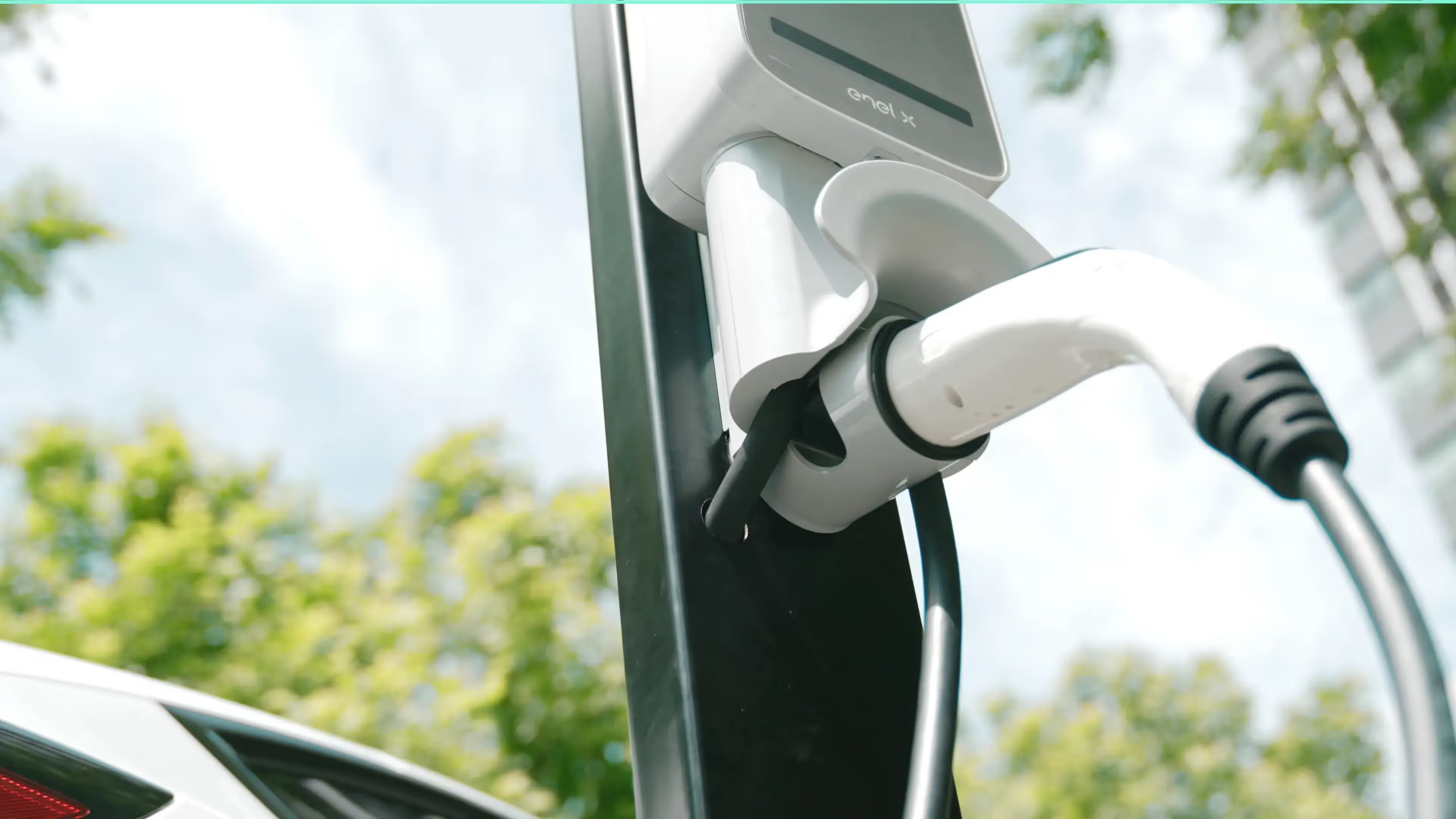
The Installation Process: From Electrical Assessment to Activation
Installing an EV charger is a significant electrical alteration that requires precision and adherence to strict safety codes. We follow a systematic process to ensure your home’s electrical system can handle the additional load without tripping breakers or causing fire hazards.
- First, a load calculation and site assessment are performed. This critical step involves analyzing your existing electrical panel to determine if there is sufficient amperage capacity to support a new continuous load. If your current panel is at capacity, we identify the need for a service upgrade or a load management device.
- Next, the appropriate wire gauge and circuit breaker are selected. EV chargers are considered "continuous loads," meaning the circuit must be rated for 125% of the charger's maximum output. For a 48-amp charger, this requires a 60-amp breaker and heavy-gauge copper wiring to prevent overheating.
- Then, we run the conduit and wiring from the main panel to the installation location. This may involve routing through attics, crawlspaces, or along exterior walls. The wiring is protected against physical damage and environmental factors.
- Subsequently, the charging unit is mounted and terminated. This involves securely fixing the unit to a stud or masonry wall and making the high-voltage connections. For outdoor installations, weather-rated seals are applied to prevent moisture ingress.
- Finally, the system undergoes commissioning and testing. We verify proper voltage levels, ground continuity, and communication between the charger and the vehicle. If the unit is Wi-Fi enabled, we assist in the initial setup to ensure you can monitor charging stats and schedule off-peak sessions.
Deciding Between Repair, Replacement, or System Upgrades
Existing charging setups may eventually require attention due to wear and tear or changing vehicle needs. Determining whether to repair an existing unit or replace it entirely depends on the age of the equipment and the nature of the failure.
When to Repair:
- Physical Damage to Cables: If the charging cable or connector (J1772 or NACS) has minor physical damage but the internal electronics are sound, a cable replacement is often cost-effective.
- Connectivity Issues: If a smart charger loses connection to Wi-Fi but still charges the car effectively, a reset or firmware update usually resolves the issue without hardware replacement.
- Breaker Trips: If the breaker trips occasionally, it may simply be a worn-out breaker switch rather than a fault in the charger itself. A diagnostic visit can confirm if the issue is at the panel.
When to Replace or Upgrade:
- Internal Component Failure: If the internal logic board or power supply of the EVSE fails, replacement is typically more economical than attempting component-level repair, especially for units out of warranty.
- Increased Power Needs: If you transition from a plug-in hybrid with a small battery to a full battery electric vehicle (BEV) capable of accepting higher amperage, an older 16-amp or 30-amp charger may feel too slow. Upgrading to a 48-amp hardwired unit maximizes your new vehicle's charging speed.
- Safety Standard Changes: Older units that lack modern safety features like thermal monitoring at the plug or ground fault circuit interrupter (GFCI) protection should be replaced to meet current safety standards.
- Smart Grid Integration: Newer chargers offer advanced features like load sharing (allowing two chargers on one circuit) and integration with solar arrays. Replacing a "dumb" charger with a smart unit allows for better energy management and cost savings.
Local Considerations for EV Infrastructure in Montegut
Installing electrical infrastructure in Montegut requires specific attention to regional environmental factors and utility regulations. The humid subtropical climate and proximity to the Gulf Coast present unique challenges for outdoor electrical installations.
- Humidity and Corrosion Protection: High annual precipitation and salt air can accelerate corrosion on electrical contacts. For chargers installed outdoors or in carports, we utilize NEMA 4 or 4X rated enclosures which offer superior protection against driving rain and corrosion compared to standard NEMA 3R units. Hardwiring is preferred over plug-in outlets for outdoor applications to eliminate connection points that can oxidize.
- Hurricane Preparedness: Electrical surges are common during tropical storms and hurricane season. We recommend and install whole-home surge protection devices or dedicated surge suppression at the EV circuit level. This protects the sensitive electronics within your vehicle and the charger from voltage spikes caused by lightning or grid fluctuations.
- Permitting and Code Compliance: Local building codes in Louisiana enforce the National Electrical Code (NEC). This includes requirements for GFCI protection on outlets used for EV charging and specific mounting heights. Professional installation ensures that all work is permitted and inspectable, which is vital for maintaining your home insurance policy’s validity.
- Utility Coordination: Understanding Entergy or local utility rate structures can influence your installation. Some homeowners choose to install smart chargers that can be scheduled to run only during off-peak hours (if time-of-use rates are available), saving money on monthly energy bills.
Professional Execution and Safety Protocols
The complexity of EV charger installation goes beyond simple wiring; it involves calculating loads to prevent main panel overloads and ensuring the longevity of your home’s electrical system. DIY installations or utilizing unqualified handymen often lead to the use of undersized wiring or improper torque on connections, both of which are leading causes of electrical fires in high-amperage circuits.
Martin's Heating & Air Conditioning prioritizes safety and long-term reliability. We utilize commercial-grade materials and adhere to manufacturer torque specifications to prevent "hot spots" in the wiring. Our technicians are trained to identify potential issues in your existing electrical service before adding the heavy load of an EV charger, providing an honest assessment of whether a panel upgrade is necessary to support your transition to electric driving.
By choosing a professional service, you also safeguard the warranty of your electric vehicle and the charging equipment. Many manufacturers void warranties if the equipment is not installed by a licensed professional. We provide documentation of the installation, proving that the circuit meets all voltage and amperage requirements specified by the EV manufacturer.
Operational Reliability and Future-Proofing
Investing in a proper home charging setup is an investment in the usability of your vehicle. A robust installation ensures that your car is ready whenever you are, removing the reliance on public infrastructure that may be out of order or incompatible with your vehicle's connector type.
- Load Management Solutions: For homes with limited electrical capacity (e.g., 100-amp service), we can install energy management systems. These smart devices monitor the total home energy usage and temporarily pause or lower the EV charging rate if the house approaches its limit (like when the AC and dryer are running simultaneously), allowing you to install a fast charger without an expensive heavy-up of your main service.
- Universal Compatibility: We install universal J1772 chargers and Tesla Wall Connectors (NACS). For households with mixed vehicle brands, we can recommend and install adapters or dual-connector solutions to ensure any future EV purchase is covered.
- Networking and Smart Control: Modern installations often include connecting the charger to your home network. This enables remote monitoring via smartphone apps, allowing you to start or stop charging, view energy consumption history, and receive notifications if charging is interrupted.
Call Us Now
Securing a dedicated, professionally installed EV charger means eliminating the guesswork of vehicle range. It provides the freedom to drive without planning your day around public charging availability. For residents in Montegut, this service ensures that your transition to electric mobility is seamless, safe, and efficient.
Take control of your vehicle’s readiness today. Call us to schedule your comprehensive site assessment and installation.
Talk to a Local HVAC Expert
.avif)