Indoor Air Quality in Houma, LA
Enhance your home's air with our indoor air quality services in Houma. Call now for a comprehensive test and tailored solutions to breathe easier.
Breathe Easier with Professional Indoor Air Quality Services
Worried about the air quality in your home due to lingering odors, excessive moisture, or persistent allergy symptoms? Discover how our expert services can significantly enhance the air you breathe by neutralizing contaminants and controlling humidity levels specifically for the local climate. Contact us online or call today to schedule a comprehensive indoor air quality test and discuss available financing options.
Martin's Heating & Air Conditioning understands that indoor pollution is often invisible, yet its effects on comfort and health are immediate. We provide rapid response and same-day service options to address your concerns without delay.
- Rapid response and same-day service options available to address urgent air quality concerns.
- Comprehensive air quality testing to identify mold spores, VOCs, and solve pollution sources.
- Tailored solutions including whole-home purifiers, HEPA filters, and dedicated humidity control systems.
Licensed and certified professionals are ready to ensure your home's air quality meets all regulatory standards and keeps your family safe.
Comprehensive Indoor Air Quality Solutions
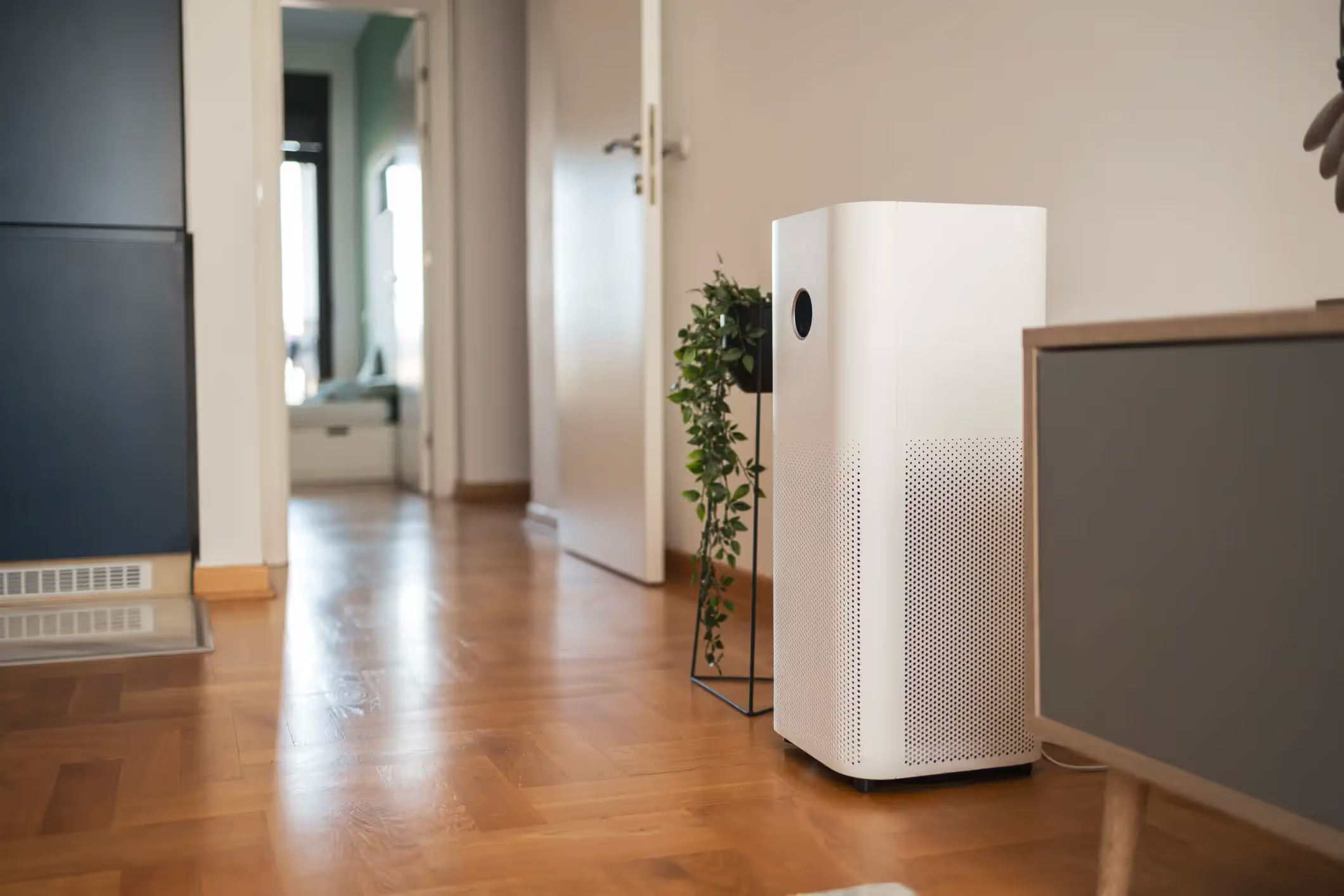
Achieving healthy indoor air requires more than just a standard HVAC filter; it demands a multi-layered approach to filtration, purification, and moisture control. Homes in Houma often suffer from "tight home syndrome," where energy-efficient sealing traps pollutants inside. Our service provides a complete overhaul of your home’s ecosystem, targeting the three main categories of indoor pollutants: particulates, biological growth, and volatile organic compounds (VOCs).
When you schedule an indoor air quality (IAQ) service, the process begins with a thorough diagnostic assessment. Technicians measure humidity levels, inspect ductwork for particulate buildup, and test for the presence of biological contaminants like mold or bacteria. Based on these findings, specific equipment is recommended to address the root cause of the pollution rather than just masking odors.
The scope of service typically includes the installation and calibration of the following systems:
- Whole-Home Dehumidifiers: In high-humidity regions, your air conditioner often cannot remove enough moisture on its own. Dedicated dehumidifiers work in tandem with your HVAC system to maintain humidity levels between 40% and 50%, inhibiting mold growth and dust mite proliferation.
- High-Efficiency Media Air Cleaners: Unlike standard 1-inch filters, media cleaners offer a larger surface area and higher MERV ratings. These capture microscopic particles such as pet dander, pollen, and fine dust that standard filters miss.
- UV Germicidal Lights: Installed directly inside the HVAC system, typically near the evaporator coil, these lights use ultraviolet energy to sterilize surfaces and air streams. This prevents biological growth on the moist coil and neutralizes airborne viruses and bacteria as they circulate.
- Energy Recovery Ventilators (ERVs): These systems exchange stale indoor air with fresh outdoor air without losing energy. They pre-condition the incoming air, reducing the load on your HVAC system while ensuring constant oxygenation and dilution of indoor pollutants.
The Installation and Integration Process
Implementing an indoor air quality strategy is a technical process that requires precise integration with your existing heating and cooling infrastructure. The goal is to treat the entire volume of air in the home as it circulates through the central handler. Improper installation can restrict airflow, leading to reduced efficiency or even damage to the HVAC unit.
Professional installation ensures that air purifiers and dehumidifiers are hardwired correctly and calibrated to the specific static pressure of your ductwork. This process guarantees that air is cleaned continuously without forcing the blower motor to overwork.
- System Assessment and Sizing: The first step involves calculating the cubic footage of the home and the airflow capacity of the current HVAC unit. Technicians determine the appropriate size for dehumidifiers and the correct MERV rating for filters that will provide maximum filtration without causing a pressure drop.
- Strategic Placement: Next, technicians identify the optimal location for equipment. UV lights are mounted to irradiate the cooling coil and drain pan, areas most prone to microbial growth. Air cleaners are positioned at the return air intake to trap contaminants before they enter the mechanical system.
- Electrical and Drainage Integration: Whole-home dehumidifiers require dedicated drainage lines to handle the large volume of water extracted from the air. Technicians route these lines to existing drains or install condensate pumps. Electrical connections are integrated with the HVAC controls so that IAQ accessories run automatically when the blower is active.
- Testing and Verification: Finally, the system is tested to verify airflow and pollutant reduction. Humidity sensors are calibrated to ensure the dehumidifier activates exactly when moisture levels rise above the setpoint. The team verifies that the air cleaner seals are airtight, preventing unfiltered air from bypassing the media.
When to Upgrade Your Air Quality Equipment vs. Repair
Homeowners often debate whether to clean existing ductwork or invest in permanent air quality hardware. While duct cleaning removes accumulated dust, it does not prevent new contaminants from entering or growing. Deciding when to install dedicated IAQ systems depends on the severity of the symptoms and the frequency of issues — see our HVAC promotions for deals.
If you find yourself constantly adjusting the thermostat because the air feels "sticky" despite the temperature being low, this indicates a humidity issue that repair or cleaning cannot solve. Similarly, if musty odors return shortly after cleaning, or if residents experience chronic respiratory issues that subside when leaving the house, source control through equipment installation is necessary.
- Persistent High Humidity: If indoor humidity remains above 55% despite the AC running, a whole-home dehumidifier is required. Relying solely on the AC to dehumidify often leads to over-cooling the space and high energy bills without solving the moisture problem.
- Recurring Biological Growth: Visible mold growth on vents, near the air handler, or musty smells that persist indicate that biological contaminants are breeding inside the system. UV lights are the definitive solution here, as they actively sterilize the environment 24/7, whereas cleaning is only a temporary fix.
- High Allergen Sensitivity: For households with asthma or severe allergy sufferers, standard filtration is rarely sufficient. If dust reappears on surfaces hours after cleaning, it suggests the current filtration system is allowing fine particulates to pass through. Upgrading to a HEPA bypass system or a high-MERV media cabinet is the only way to trap these microscopic irritants effectively.
- Chemical Sensitivity and VOCs: If the home has been recently renovated, painted, or furnished, off-gassing chemicals can linger for years. Standard filters do not stop gases. In these cases, installing an oxidizing air purifier that targets VOCs is necessary to break down chemical compounds at the molecular level.
Handling Local Climate Challenges
The climate in Houma presents specific challenges that dictate how indoor air quality must be managed. With annual rainfall averaging around 60 inches and a hurricane season that spans from June to November, moisture control is the primary concern for local homeowners. The high outdoor humidity exerts constant vapor pressure on the home, forcing moisture through walls and gaps in the building envelope.
Martin's Heating & Air Conditioning accounts for these local variables when designing air quality systems. In this region, ignoring latent heat (humidity) results in a clammy, uncomfortable indoor environment even when the temperature is 72 degrees. Furthermore, the risk of storm surges and heavy rainfall increases the potential for water intrusion, making rapid drying and continuous dehumidification essential to prevent structural damage and mold outbreaks.
- Permits and Regulations: Modifying the HVAC system to add whole-home units often requires adherence to local mechanical codes. Professional technicians ensure that all electrical connections and condensate disposal methods meet municipal safety standards.
- Utility Considerations: Running additional equipment impacts energy usage. However, properly installed dehumidifiers allow you to set your thermostat higher (e.g., 76 degrees instead of 72) while feeling cooler due to the dry air. This balance often results in net energy savings during the long, hot summers.
- Seasonal Maintenance: The transition from the humid summer to the milder winter requires adjusting humidity setpoints. Professionals provide guidance on optimizing settings for different seasons to prevent over-drying in winter or under-drying in summer.
The Long-Term Value of Clean Air
Investing in professional indoor air quality services provides tangible benefits beyond immediate comfort. By removing abrasive dust and particulate matter from the air, you protect the internal components of your heating and cooling system. Dust buildup on blower motors and evaporator coils insulates the parts, causing them to overheat and fail prematurely. Clean air extends the lifespan of your expensive HVAC equipment.
Furthermore, neutralizing airborne pathogens and allergens creates a safer living environment. Reducing the viral load in the home helps prevent the spread of illnesses among family members, while eliminating mold spores protects the respiratory health of everyone in the household. The reduction in dust also means less time spent cleaning and dusting surfaces.
Effective air management transforms a house into a sanctuary. It eliminates the "stale" feeling often associated with closed-up homes and replaces it with fresh, crisp air that is easier to breathe and sleep in.
Secure Your Home’s Air Quality Today
Don't let invisible pollutants compromise your health or comfort. Take control of your indoor environment with proven solutions designed to tackle humidity, allergens, and biological growth.
Protect your family and your investment with a comprehensive air quality evaluation. Call now to schedule your service and breathe easier tonight.
Talk to a Local HVAC Expert
.avif)