Is Your HVAC System Ready for Houma’s Humid Climate?
Dealing with inconsistent cooling or rising humidity levels inside your home creates frustration during the long storm seasons in Houma. You need a system that functions efficiently despite the scorching summer heat and the sudden pressure drops associated with hurricane season. Contact us today to schedule your comprehensive maintenance service.
- Quick, same-day service ensures your comfort remains uninterrupted.
- Expert maintenance protocols specifically designed to combat high humidity and heavy rainfall.
- Efficient 24-hour response teams ready for any HVAC emergency.
We are licensed, insured, and ready to help, with financing options available for major system upgrades.
Comprehensive HVAC Services for Houma Weather Challenges
The climate in Houma presents unique challenges for residential and commercial heating and cooling systems. High ambient humidity places a massive "latent load" on your air conditioner, meaning the unit must work twice as hard to remove moisture from the air before it can effectively lower the temperature. When a system is neglected, this excess moisture leads to clammy indoor environments, mold growth in ductwork, and premature compressor failure. Martin's Heating & Air Conditioning specializes in optimizing systems to handle these specific environmental stressors.
Effective climate control requires more than just blowing cold air. It involves the precise management of airflow and refrigerant pressures to ensure the dew point is reached efficiently. Our approach focuses on the total health of the HVAC unit, ensuring that the condenser coils are free of debris that often accumulates during stormy weather and that the evaporator coils are clean enough to facilitate proper heat exchange. Without this level of attention, energy bills skyrocket as the system runs longer cycles to achieve the thermostat setting.
Furthermore, the risk of tropical storms and hurricanes requires proactive measures. Outdoor units must be secured and elevated to avoid flood damage, and electrical components need protection from power surges common during inclement weather. Addressing these issues before the peak of summer or the height of hurricane season prevents catastrophic breakdowns when you need climate control the most.
Today's HVAC Service: Fast, Reliable, and Ready when You Are
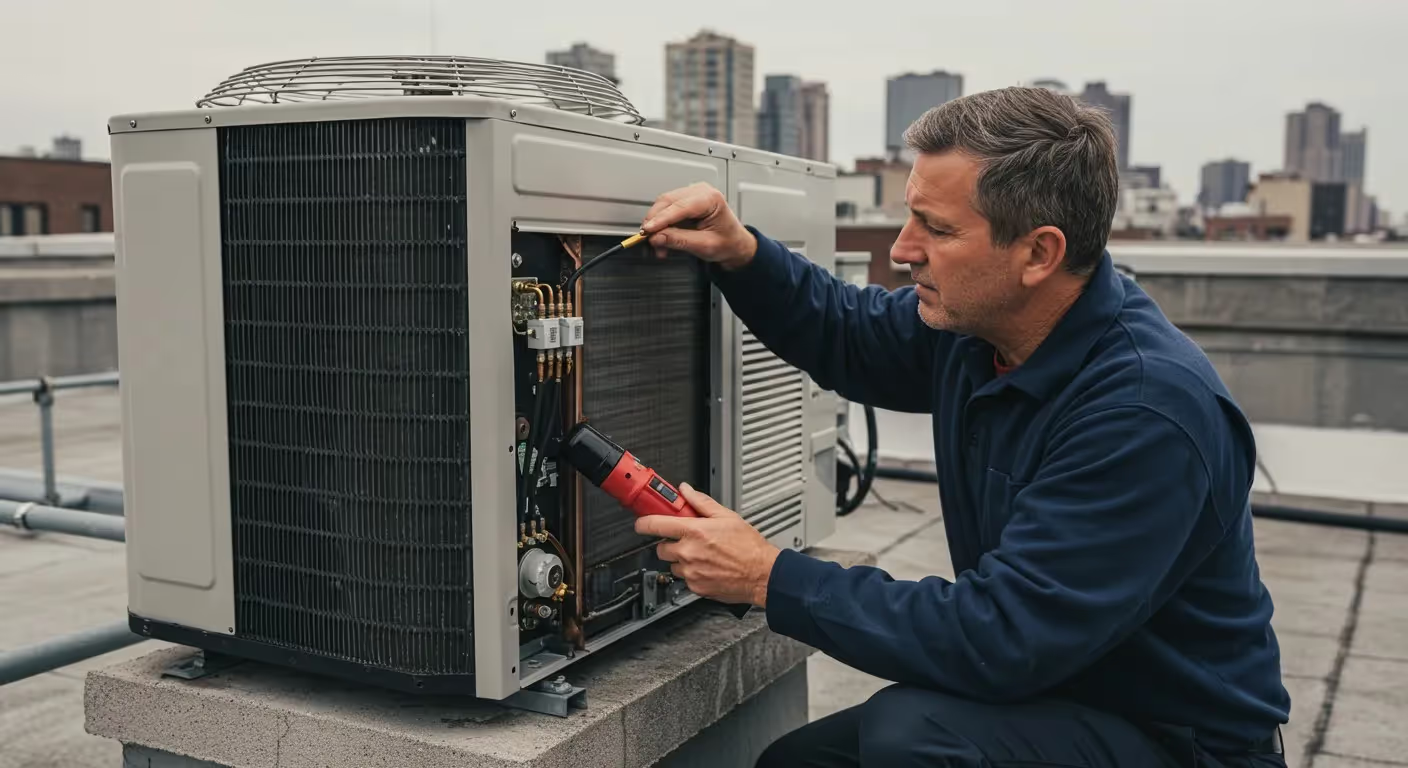
When you schedule a maintenance or service visit, the goal is to restore the system to factory specifications. A professional tune-up is a comprehensive audit of the system’s performance, not a superficial visual check. The scope of work for a standard maintenance visit is rigorous and designed to extend the lifespan of your equipment.
Electrical Component Inspection
- Technicians tighten all electrical connections to prevent voltage fluctuations that can burn out motors.
- Capacitors are tested for proper microfarad readings; weak capacitors are the leading cause of compressor and fan motor failure.
- Contactors are inspected for pitting or burning, which can lead to arcing and system failure.
Refrigerant and Airflow Analysis
- Gauges are attached to measure superheat and subcooling levels, ensuring the refrigerant charge is exact.
- Undercharged systems freeze up, while overcharged systems run at dangerous pressures; both scenarios ruin efficiency.
- Blower motor amps are measured to ensure the fan is moving the correct volume of air across the coils.
Drainage and Hygiene
- The condensate drain line is cleared of algae and sludge buildup to prevent water damage to ceilings or floors.
- Drain pans are treated to inhibit biological growth.
- Air filters are inspected and replaced if necessary to maintain proper static pressure within the ductwork.
Safety Controls
- High and low-pressure switches are tested to ensure they shut the system down to protect the compressor during faults.
- For gas furnaces, heat exchangers are inspected for cracks to prevent carbon monoxide leaks.
- Flame sensors and igniters are cleaned and tested for reliable heating operation.
Streamlined HVAC Installation: Step by Step to Better Air
There comes a time when maintenance can no longer revive a dying unit. When installation is required, the process must be executed with precision to ensure the new system delivers the promised SEER (Seasonal Energy Efficiency Ratio) ratings. A poor installation can reduce a unit's efficiency by up to 30%, negating the investment in high-efficiency equipment.
Load Calculation and Sizing
- The process begins with a Manual J load calculation. This determines the exact heating and cooling requirements of the home based on square footage, insulation levels, window orientation, and local climate data for Houma.
- Guessing the size often leads to "short-cycling," where a unit is too big and cools the air too quickly without removing humidity, leaving the home cold but damp.
System Selection
- Options are reviewed based on budget, efficiency goals, and noise requirements.
- Decisions are made regarding single-stage, two-stage, or variable-speed compressors, with variable-speed often being the best choice for humidity control — see current promotions today.
Removal and Site Preparation
- The old refrigerant is recovered according to EPA guidelines to prevent environmental contamination.
- The existing unit is disconnected and removed.
- The mounting pad is leveled or replaced to ensure the new outdoor unit sits stable and above potential water accumulation zones.
Installation and Brazing
- The new indoor and outdoor units are positioned.
- Refrigerant lines are brazed using nitrogen purging to prevent oxidation inside the copper lines, which ensures the new refrigerant remains pure.
- A filter drier is installed to capture any moisture or contaminants in the closed loop.
Commissioning and Testing
- The system is pressure-tested with nitrogen to check for leaks.
- A deep vacuum is pulled to remove all moisture and non-condensables from the lines.
- The system is charged with refrigerant, and static pressure tests are conducted to verify airflow balance.
Deciding on HVAC Replacement vs. Repair: A Quick Guide
Homeowners often struggle with the financial decision of whether to repair an aging unit or invest in a replacement. Making the right choice depends on a combination of the system's age, repair history, and current efficiency standards.
The 50% Rule
- If the cost of the repair approaches 50% of the value of the system, replacement is generally the better financial move.
- Investing heavy capital into a degrading asset rarely provides a return on investment, as other components are likely to fail shortly after.
Age of the Equipment
- Systems over 10 to 15 years old are nearing the end of their useful life.
- Technology has advanced significantly; modern units use less electricity to provide the same amount of cooling.
- If the unit uses R-22 refrigerant (Freon), repair costs will be exorbitant due to the phase-out of this chemical. Upgrading to a system that uses R-410A or newer refrigerants is necessary for long-term viability.
Frequency of Breakdowns
- "Nickel and diming" is a sign of systemic failure. If you have required repairs more than twice in the last two years, the system is unreliable.
- Frequent breakdowns indicate that the internal components are worn out and can no longer handle the stress of daily operation.
Comfort and Efficiency Issues
- If some rooms are hot while others are freezing, or if humidity levels remain high despite the AC running, the system may be improperly sized or the ductwork compromised.
- Rising energy bills without a change in usage habits indicate the system is losing efficiency and working harder to maintain the set temperature.
Adapting to Houma's Climate: Your HVAC Guide
Operating an HVAC system in Houma requires specific considerations regarding local codes, environmental factors, and seasonal preparation. The proximity to the Gulf of Mexico introduces salt air, which accelerates corrosion on outdoor condenser coils.
Combating Corrosion
- Systems in this region benefit from coastal coating protection on the aluminum fins of the condenser.
- Regular rinsing of the outdoor unit is recommended to remove salt deposits that eat away at the metal, leading to refrigerant leaks.
Flood Mitigation and Elevation
- Local building codes and practical experience dictate that outdoor units (compressors) should be elevated on stands or high concrete pads.
- This protects the electrical components and the fan motor from standing water during heavy downpours or minor flooding events common in the area.
Permits and Regulations
- HVAC replacement is a construction activity that often requires adherence to local building codes.
- Proper permitting ensures that the electrical work meets safety standards and that the refrigerant lines are installed correctly.
- Working with a licensed provider ensures all paperwork is handled correctly, avoiding fines or issues when selling the home later.
Seasonal Shifts
- The transition from winter to spring is rapid. Martin's Heating & Air Conditioning recommends scheduling maintenance in early spring to prepare the cooling system before the heat index spikes.
- Conversely, furnace checks should happen in late autumn. While winters are mild, a neglected gas furnace can still pose carbon monoxide risks or fail to ignite during the few freezing nights of the year.
Why Choose Us: Over 30 Years Keeping Houma Comfortable
Reliability in the service industry is built on consistency and technical expertise. Your comfort depends on technicians who understand the science of thermodynamics and the specific electrical requirements of modern HVAC equipment. We focus on technical accuracy rather than sales tactics.
- Licensed Professionals: Every technician holds the necessary state certifications and undergoes continuous training to stay updated on the latest HVAC technologies and code requirements.
- Diagnostic Accuracy: We utilize advanced diagnostic tools to identify the root cause of the problem, ensuring we fix the issue rather than just treating the symptom.
- Warranty Support: We stand behind our work with labor warranties and assist in processing manufacturer parts warranties to keep your out-of-pocket costs clear and documented.
- Local Understanding: Being deeply rooted in the community means we understand the specific load requirements for homes in this area, ensuring your system is sized and tuned for the local climate.
Your home’s air quality and temperature regulation are too important to leave to chance. Whether you need an emergency repair, a seasonal tune-up, or a complete system overhaul, you require a partner who values your time and comfort.
Call Us Now
Take control of your indoor climate today. Contact Martin's Heating & Air Conditioning to secure your appointment and restore efficiency to your home.
Talk to a Local HVAC Expert
.avif)