
Effective Heat Pump Installations for Immediate Comfort
Dealing with unexpected heating failures or rising energy bills can disrupt your entire household routine. Discover how our prompt, expert heat pump installation and repair services bring reliable, year-round comfort to your home in Chauvin; contact us today for an estimate or to discuss financing options.
When your climate control system fails, you need a solution that addresses both the immediate discomfort and long-term efficiency.
- Quickly restore your comfort with same-day installation services where available.
- Enjoy long-lasting performance and efficiency with professional setups designed for local humidity.
- Benefit from clear, upfront pricing and flexible financing options that fit your budget.
All services are delivered with a full warranty and strict adherence to local codes for your peace of mind. Martin's Heating & Air Conditioning ensures that your home transitions smoothly to a high-performance system capable of handling the unique weather patterns of our region.
What Our Heat Pump Service Includes: Speed, Precision, Guarantee
A heat pump installation is more than just swapping out a box; it is a comprehensive upgrade to your home's thermal envelope. Our service begins with a thorough evaluation of your current infrastructure. Many homeowners in Chauvin assume a direct replacement is sufficient, but changes in home insulation, windows, or even tree cover can alter the heating and cooling load required. We perform a detailed load calculation to ensure the new unit is sized perfectly—neither too small to keep up nor too large to cycle efficiently.
The scope of our installation service covers every component necessary for a fully distinct system. This includes the outdoor condenser unit, the indoor air handler, and the refrigerant line sets connecting them. We assess existing ductwork for leaks or disconnects that could undermine the efficiency of your new equipment. If the ductwork is compromised, high-efficiency equipment will simply push expensive conditioned air into your attic or crawlspace. Our team seals and reinforces these pathways to guarantee that the air you pay for reaches your living space.
We also handle all electrical modifications required for modern systems. Newer heat pumps often have different amperage requirements or require updated disconnect boxes for safety. Our technicians manage the high-voltage wiring and the low-voltage control wiring that connects to your thermostat. Speaking of thermostats, we include the installation and calibration of smart thermostats or programmable units that allow you to maximize the variable-speed technology found in modern heat pumps. This ensures you have total control over humidity levels and temperature, regardless of the season.
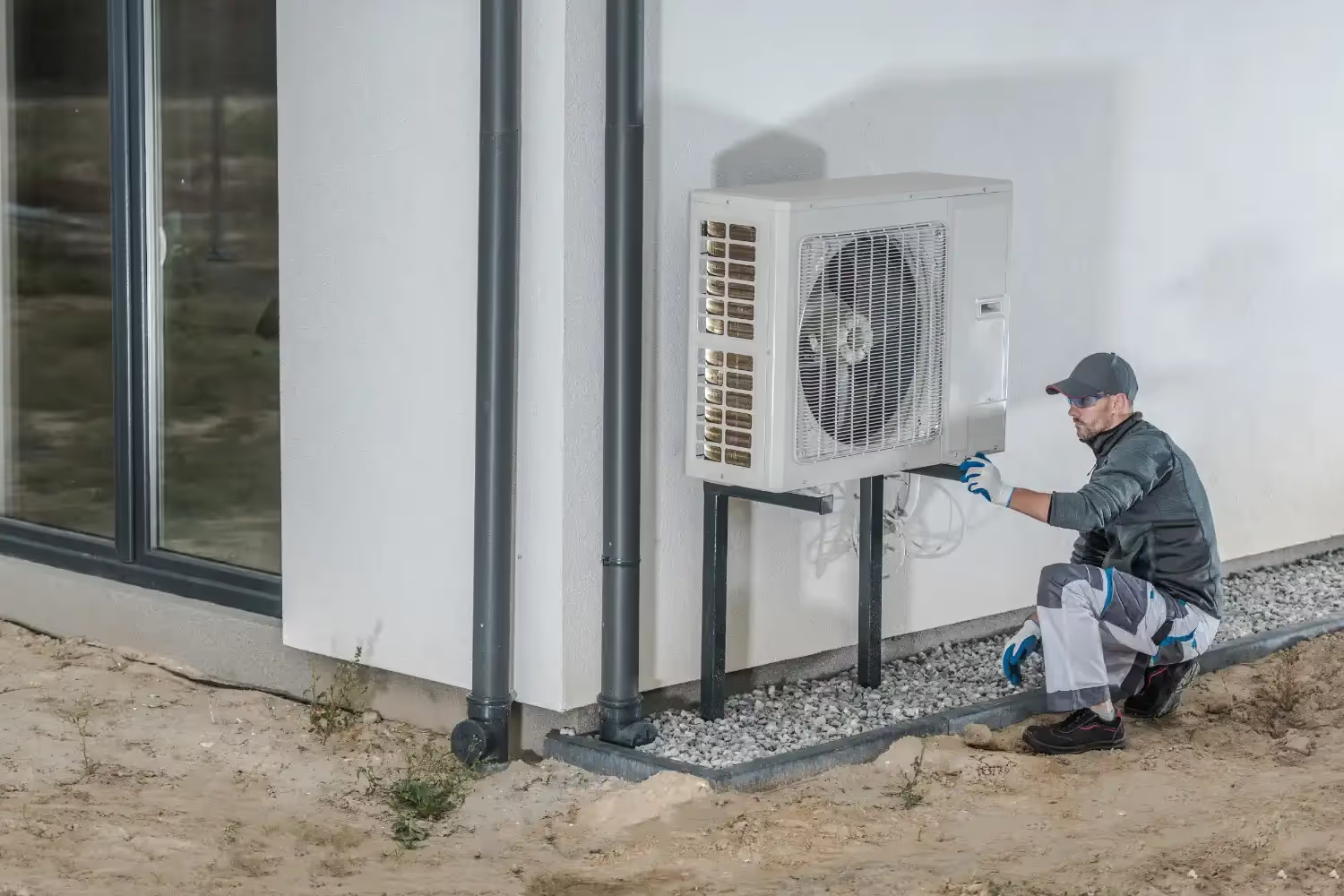
Your Installation Process: Steps to Enhance Your Home’s Climate Control
A structured installation process is critical to the longevity of your system. Skipping steps during the setup phase is the leading cause of premature compressor failure and efficiency loss. We follow a rigid protocol designed to protect your investment from day one.
- First, the site preparation phase begins. We carefully remove the existing unit, ensuring that all refrigerant is recovered according to EPA regulations to prevent environmental contamination. We then prepare the installation surface. For outdoor units, this means ensuring the composite or concrete pad is perfectly level and elevated above potential standing water zones, which is vital given the regional rainfall.
- Next, we position the new equipment. The indoor air handler is secured, and the outdoor condenser is strapped down. In areas prone to high winds, we utilize hurricane-rated straps and anchors to secure the unit to the pad. This step is not just about code compliance; it is about ensuring your system remains intact during severe weather events.
- Following physical placement, we connect the refrigerant lines. This is a precision task requiring brazing with nitrogen purging. Flowing nitrogen through the lines while brazing prevents oxidation buildup inside the copper tubing. If oxidation occurs, it can flake off later and clog the sensitive expansion valves or the compressor, leading to catastrophic failure.
- Then, we perform a triple evacuation of the system. Using a vacuum pump, we remove all moisture and non-condensables from the lines. Moisture inside a heat pump system is a killer; it mixes with refrigerant oil to create acid, which eats away at the motor windings. Our vacuum process ensures the system is clinically dry before we release the factory charge.
- Finally, we commission the system. This involves checking static pressure in the ducts, measuring the temperature split between supply and return air, and verifying that the system draws the correct amperage. We walk you through the operation of your new system, showing you how to change filters and program your thermostat for optimal savings — join our maintenance plan for ongoing care.
Deciding Between Repair and Replacement: A Quick Guide
Homeowners often struggle with the decision to repair an aging unit or invest in a new system. While repairs can offer a short-term fix, there is a mathematical tipping point where replacement becomes the more financially sound option. We help you navigate this decision by looking at the projected lifespan and current efficiency of your equipment.
- Consider the age of the unit. Heat pumps generally have a lifespan of 10 to 15 years. If your system is approaching or has exceeded this range, a major component failure is often a signal that other parts are likely to fail soon. Putting money into a compressor for a 14-year-old unit is rarely a good return on investment.
- Analyze the frequency of breakdowns. If you have required repairs more than once in the last two years, the system is likely becoming unreliable. The cost of multiple service calls, combined with the inconvenience of downtime, often outweighs the monthly cost of financing a new, reliable system.
- Look at energy bills. As heat pumps wear, they lose efficiency. Coils degrade, motors experience more friction, and compressors work harder to achieve the same result. If you have noticed a steady creep in your utility costs despite normal usage, your system’s SEER (Seasonal Energy Efficiency Ratio) rating is likely effectively much lower than when you bought it. Modern systems offer SEER2 ratings that can drastically cut monthly operational costs — view current promotions on new systems.
- Evaluate the cost of the repair against the value of the system. We often recommend the "50% rule." If the cost of the repair is 50% or more of the cost of a new system (or the current value of the unit), replacement is the smarter financial move. Additionally, if your older system uses phased-out refrigerants like R-22, the cost to recharge it will be exorbitant compared to modern R-410A or newer refrigerant systems.
Understanding Chauvin's Climate Needs: Why Heat Pumps Work Here
Chauvin presents a unique set of challenges for HVAC equipment. The climate is humid subtropical, characterized by hot, oppressive summers and mild but damp winters. This specific weather profile makes heat pumps an ideal solution compared to traditional furnace and AC combinations. Heat pumps excel at moving heat rather than generating it, which is highly efficient for our mild winters where temperatures rarely drop to levels that require gas combustion.
- Humidity control is the primary battle. With annual precipitation hovering around 60 inches and high ambient humidity, your cooling system must do more than just drop the temperature; it must dehumidify the air. Modern variable-speed heat pumps run for longer cycles at lower capacities. This extended run time allows the system to pull more moisture out of the air, making your home feel cooler at higher set temperatures and preventing mold growth in ductwork.
- Severe weather preparedness is mandatory. The region is vulnerable to tropical storms and hurricanes from June to November. Installations here require specific attention to wind ratings and flood avoidance. We prioritize elevating outdoor units on stands or high pads to protect them from storm surge or heavy accumulation of rainwater. Additionally, proper anchoring ensures the unit does not become a projectile or suffer damage from high winds.
- Salt and corrosion resistance. Being close to the coast means the air carries a higher salt content, which can corrode standard aluminum fins on condenser coils. We recommend and install units with specialized coatings or all-aluminum coil designs that resist galvanic corrosion. This extends the life of the outdoor unit significantly compared to standard untreated equipment.
Why Choose Us? Our Commitments to Excellence and Local Expertise
Selecting a contractor is as important as selecting the brand of equipment. The Department of Energy states that improper installation can reduce a system's efficiency by up to 30%. This means a top-tier unit installed poorly will perform worse than a mid-tier unit installed perfectly. We focus on the science of installation to ensure you get the performance you paid for.
- Technical training is at the core of our operations. Our technicians are trained on the specific nuances of heat pump technology, including the complex defrost boards and reversing valves that differentiate them from standard air conditioners. We understand the specific charge requirements for different line set lengths and lift heights.
- We utilize advanced diagnostic and installation tools. From digital manifolds that provide precise pressure readings to micron gauges that confirm a vacuum is tight, we do not rely on "rule of thumb" guesswork. Every connection is torque-wrenched to specification, and every airflow measurement is verified with digital anemometers.
- We provide transparent, decision-stage consultation. We do not pressure you into the most expensive unit; we guide you toward the unit that fits your home’s load calculation and your budget. We explain the difference between single-stage, two-stage, and variable-speed inverters so you can decide how much efficiency and comfort you want to purchase.
- Local familiarity matters. We know the electrical grid fluctuations and the water quality issues that can affect systems in Chauvin. We know which permits are required for change-outs and how to navigate local building codes regarding setbacks and noise ordinances. This local knowledge prevents project delays and ensures your installation passes inspection the first time.
Martin's Heating & Air Conditioning is dedicated to providing a seamless, professional experience from the initial assessment to the final walkthrough. We believe that your comfort is non-negotiable, and our processes are built to guarantee it. Restore your peace of mind and climate control today. Schedule your heat pump consultation now.
Schedule Your Heat Pump Installation Estimate
Don’t let an aging or unreliable heat pump leave your home vulnerable to Chauvin’s humidity and temperature swings. Whether your system is failing, inefficient, or costing you more every month, Martin’s Heating & Air Conditioning delivers fast, precision-engineered installations built for Louisiana’s demanding climate. From correct system sizing to advanced commissioning, we ensure your new heat pump provides reliable, year-round comfort and long-term energy savings. Protect your home, reduce utility costs, and upgrade with confidence—schedule your heat pump consultation or request a free installation estimate today.
Talk to a Local HVAC Expert

.avif)