Is Your HVAC System Ready for the Season?
With Galliano’s humid summers and mild winters, ensuring your HVAC system is in top condition is crucial for consistent home comfort. There is nothing worse than an HVAC breakdown during a heat wave or a sudden cold snap, leaving your home uncomfortable and unsafe. Contact us today to schedule your comprehensive tune-up.
Martin's Heating & Air Conditioning ensures your equipment operates at peak performance, helping you avoid the stress of emergency repairs:
- Rapid same-day service availability to prevent any comfort disruptions.
- Professional upkeep to significantly extend the lifespan of your HVAC system.
- Energy-efficient maintenance designed to lower your monthly bills and environmental impact.
All services are performed by certified technicians with full adherence to local codes and regulations.
Keep Your Comfort with Professional HVAC Maintenance
Neglecting your heating and cooling equipment often leads to compounded issues that result in premature failure. In the high-humidity environment of the region, your system works harder than it would in drier climates. Moisture management is a critical function of your air conditioner, and when efficiency drops, humidity levels inside the home rise. This creates an environment conducive to mold growth and discomfort, even when the thermostat reads a cool temperature.
Routine professional maintenance acts as an insurance policy for your home comfort. It moves beyond simple filter changes to address the mechanical and electrical wear and tear that occurs during peak usage months. Friction, vibration, and dust accumulation slowly degrade the performance of motors and coils. Addressing these issues proactively ensures that your system consumes less energy while providing better output.
Homeowners in Galliano often face the dilemma of waiting until a noise occurs or a vent stops blowing air before calling a professional. However, by the time symptoms are noticeable, the damage is often already done. BOFU (Bottom of the Funnel) decisions regarding maintenance should be based on asset protection. Your HVAC system is likely the most expensive appliance in your home; protecting that investment requires technical precision and regular attention.
Today's HVAC Services: What We Offer and When
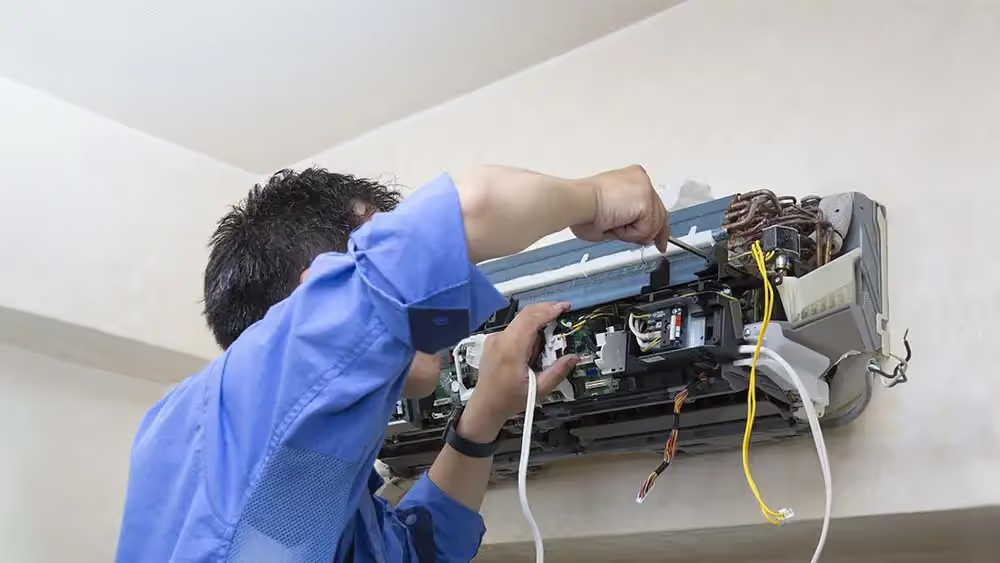
A professional tune-up is a rigorous, multi-point inspection and cleaning process designed to restore your unit to factory specifications. We do not simply glance at the unit; we strip away the layers of dust and debris to analyze the core components:
Comprehensive Cooling Maintenance
- Condenser Coil Cleaning: The outdoor unit gathers dirt, grass clippings, and pollen, which block airflow and inhibit heat transfer. We chemically clean these coils to ensure the system can release heat efficiently.
- Refrigerant Level Inspection: Improper refrigerant charge—whether too high or too low—can damage the compressor and reduce cooling capacity. We measure superheat and subcooling levels to ensure precision.
- Electrical Component Testing: Capacitors, contactors, and relays are tested for proper voltage and amperage. Worn electrical parts are a leading cause of sudden compressor failure.
- Condensate Drain Clearing: In humid climates, algae and sludge can block the drain line, leading to water damage in your home. We flush and treat the line to ensure proper drainage.
Thorough Heating Maintenance
- Heat Exchanger Inspection: A cracked heat exchanger can leak carbon monoxide into the home. We inspect this critical component for any signs of corrosion or fractures.
- Burner Assembly Cleaning: Dirty burners result in inefficient combustion and soot buildup. We clean and adjust the assembly for a clean, blue flame.
- Safety Switch Verification: Limit switches and safety controls are tested to ensure the unit shuts down properly in case of overheating or airflow restriction.
- Blower Motor Analysis: We check the blower motor for bearing wear and belt tension (if applicable) to ensure air is circulating correctly throughout the ductwork.
Timing Your Service
- Spring: ideally scheduled before the first heat wave hits. This prepares the AC to handle high loads.
- Fall: Best scheduled before the temperature drops, ensuring your furnace or heat pump is safe and ready for winter operation.
Understanding the HVAC Maintenance Process: Step by Step
Knowing what to expect during a service visit helps you plan your day and understand the value provided. Our process is streamlined, respectful of your property, and focused on technical accuracy:
- Arrival and Site Assessment: The technician arrives fully equipped and assesses the general condition of your indoor and outdoor units. They will ask about any specific concerns you have noticed, such as strange noises or uneven cooling in certain rooms.
- System Shutdown and Safety Lockout: To ensure safety, power to the HVAC system is turned off. This allows the technician to open panels and access high-voltage areas without risk.
- Internal Cleaning and Lubrication: The technician proceeds to clean internal components. This includes vacuuming the cabinet, lubricating moving parts like motor bearings to reduce friction, and tightening all electrical connections that may have vibrated loose.
- Operational Testing: Once cleaning is complete, the power is restored. The technician runs the system through a full cycle, measuring temperature differentials (the difference between supply and return air) to verify cooling or heating capacity.
- Performance Reporting: You receive a detailed report of the findings. If a part is near the end of its lifecycle, you are informed immediately with options, rather than being pressured into a sale.
Repair or Replace? A Quick Guide for Your HVAC Needs
Deciding between sinking money into a repair or investing in a new system is a financial calculation. While maintenance extends life, every mechanical system has an expiration date. We help you navigate this decision using logic and data rather than guesswork:
The 50% Rule
If the cost of the repair approaches or exceeds 50% of the value of a new system, replacement is generally the smarter financial move. Investing heavily in an old unit often leads to "throwing good money after bad" as other components begin to fail shortly after.
Age of the Equipment
- Under 10 Years: Most systems under a decade old warrant repair, especially if they have been well-maintained. Warranties may still be active, covering the cost of parts.
- Over 15 Years: Systems in this age range are living on borrowed time. Efficiency standards have changed drastically. A 15-year-old unit is likely operating at a much lower SEER (Seasonal Energy Efficiency Ratio) than modern units, meaning you are paying more for energy every month.
Frequency of Breakdowns
If you have required repairs more than once in the last two years, the system is becoming unreliable. Frequent breakdowns indicate that the internal components are degrading collectively.
Refrigerant Type
Older systems often utilize R-22 refrigerant, which has been phased out and is incredibly expensive to restock. If your older unit has a refrigerant leak, upgrading to a system that uses R-410A or newer refrigerants is often the only viable long-term solution.
Navigating Galliano’s HVAC Regulations and Seasonal Advice
Operating an HVAC system in Louisiana requires specific attention to environmental factors that do not affect other parts of the country. The proximity to water and the intense humidity levels create specific challenges for your equipment:
- Humidity and Moisture Control: Standard air conditioners dehumidify as they cool, but in extreme humidity, they may not remove enough moisture before reaching the set temperature. This can lead to "short cycling," where the unit turns on and off frequently. Maintenance checks ensure your thermostat settings and blower speeds are optimized to maximize moisture removal.
- Corrosion and Salt Air: For homes located closer to the coast or bayou, salt air can accelerate corrosion on the outdoor condenser coils. Aluminum fins can deteriorate, leading to a loss of heat transfer capabilities. Regular rinsing and professional chemical cleaning are essential to remove salt deposits and prevent premature rot of the metal.
- Permits and Compliance: While routine maintenance typically does not require a permit, significant repairs or component replacements often do. We handle all necessary paperwork to ensure your system remains code-compliant. This is particularly important for insurance purposes and future home sales.
- Hurricane Preparedness: Part of our seasonal advice involves securing your outdoor unit. Ensure the unit is strapped down according to local wind codes. During maintenance, we check the stability of the mounting pad and the integrity of the tie-downs to ensure the unit stays in place during high winds.
Why Choose Us: Our Credentials and Customer Success Stories
Selecting a service provider is about trust and technical competence — read our reviews to learn why neighbors trust us. You need a team that understands the specific load calculations required for homes in this region and respects your time:
- Certified Expertise: Our technicians undergo rigorous training and hold certifications that validate their ability to work on all major makes and models. We stay updated on the latest HVAC technologies, including variable-speed compressors and smart thermostat integration.
- Transparent Communication: You will never see hidden fees on your invoice. We believe in upfront explanation of the work required. If a part needs replacing, we explain why, show you the worn component, and provide a clear price before proceeding.
- Respect for Your Home: We treat your property with care. Technicians use shoe covers and drop cloths to protect your flooring and ensure the work area is left cleaner than we found it.
- Inventory Availability: Our service vehicles are stocked with the most common parts, including capacitors, contactors, and motors. This allows us to complete most repairs and maintenance tasks in a single visit, respecting your time and restoring your comfort faster.
Protect Your Home’s Comfort With Expert HVAC Service: Act Today
When you need reliability and technical excellence, Martin's Heating & Air Conditioning is the partner you can rely on. Do not wait for a complete system failure to give your HVAC system the attention it needs.
Talk to a Local HVAC Expert
.avif)