Immediate Solutions to Heat Your Home
When your heater fails, especially during the unpredictable weather patterns common in Larose, the physical discomfort and risk to your home infrastructure can be immediate and severe. You need a resolution that restores warmth without delay, ensuring your family remains safe and your pipes remain unfrozen during unexpected cold snaps. Contact us now or schedule a service visit to restore your system immediately.
Martin's Heating & Air Conditioning is prepared to diagnose and rectify your heating failure efficiently, leveraging deep technical expertise to handle everything from minor component swaps to major system overhauls. We understand that heating loss is rarely convenient, which is why we prioritize rapid mobilization to get your environment back to a consistent, comfortable temperature.
Our approach to restoring your comfort focuses on speed, transparency, and technical accuracy:
- Technicians are available 24/7 for emergency repairs to address breakdowns outside of standard business hours.
- We provide transparent pricing structures and ensure there are no hidden fees before work begins.
- Our team performs rapid diagnosis using advanced tools to implement effective solutions that return your heating to optimal function.
- All services are performed by licensed professionals, ensuring quality and strict compliance with local regulations.
What Our Heating Repair Services Include
Effective heating repair requires a comprehensive understanding of the entire HVAC ecosystem. Our technicians do not simply treat symptoms; we isolate the root cause of the failure to prevent recurrence. Whether your home relies on a gas furnace, an electric heat pump, or a hybrid heating system, the components are subjected to significant strain due to the high humidity levels found in this region. We address every aspect of the heating cycle to ensure thermal efficiency and safety — view maintenance plans.
Ignition and Combustion Systems
For gas furnaces, the ignition system is a frequent point of failure. Modern systems often use hot surface ignitors or intermittent pilots, which can degrade over time or crack due to thermal stress.
- We inspect and test the ignition sequence to ensure the burners light safely and consistently.
- Technicians clean and adjust flame sensors, which are critical for shutting down gas flow if a flame is not detected.
- We examine the burners for rust or misalignment, which can cause inefficient combustion and hazardous carbon monoxide buildup.
- Gas valve calibration is checked to ensure the unit is receiving the correct pressure for optimal burn efficiency.
Airflow and Blower Motor Operations
A heating system is only as good as its ability to distribute air. If the furnace generates heat but the house remains cold, the blower assembly is often the culprit.
- We repair or replace failing blower motors that have seized or are overheating due to electrical strain.
- Technicians clean blower wheels impacted by dust and debris, which can drastically reduce airflow and strain the motor.
- Capacitors, which provide the torque needed to start the motor, are tested and replaced if they fall below manufacturer specifications.
- Belt tension and alignment are corrected on older belt-driven units to prevent slippage and noise.
Electrical and Control Circuits
Modern heating systems rely on complex boards and sensors to manage operation. Electrical failures are common triggers for system lockouts.
- We troubleshoot printed circuit boards (PCBs) to identify short circuits or failed relays.
- Technicians inspect all wiring connections for loose terminations or corrosion, a common issue in humid environments.
- Limit switches, which prevent the unit from overheating, are tested to ensure they engage and disengage at the correct temperatures.
- Thermostat communication is verified to ensure the signal from your living space is accurately reaching the heating unit.
Heat Exchanger Integrity
The heat exchanger is the most critical component for safety. It separates the combustion gases from the breathing air in your home.
- We perform rigorous visual and camera-aided inspections of the heat exchanger to identify cracks or holes.
- Technicians look for signs of corrosion or metal fatigue that could lead to carbon monoxide leaks.
- If a heat exchanger is compromised, we provide immediate safety shutdowns and discuss options, as this is a non-negotiable safety hazard.
Understanding Our Heating Repair Processes
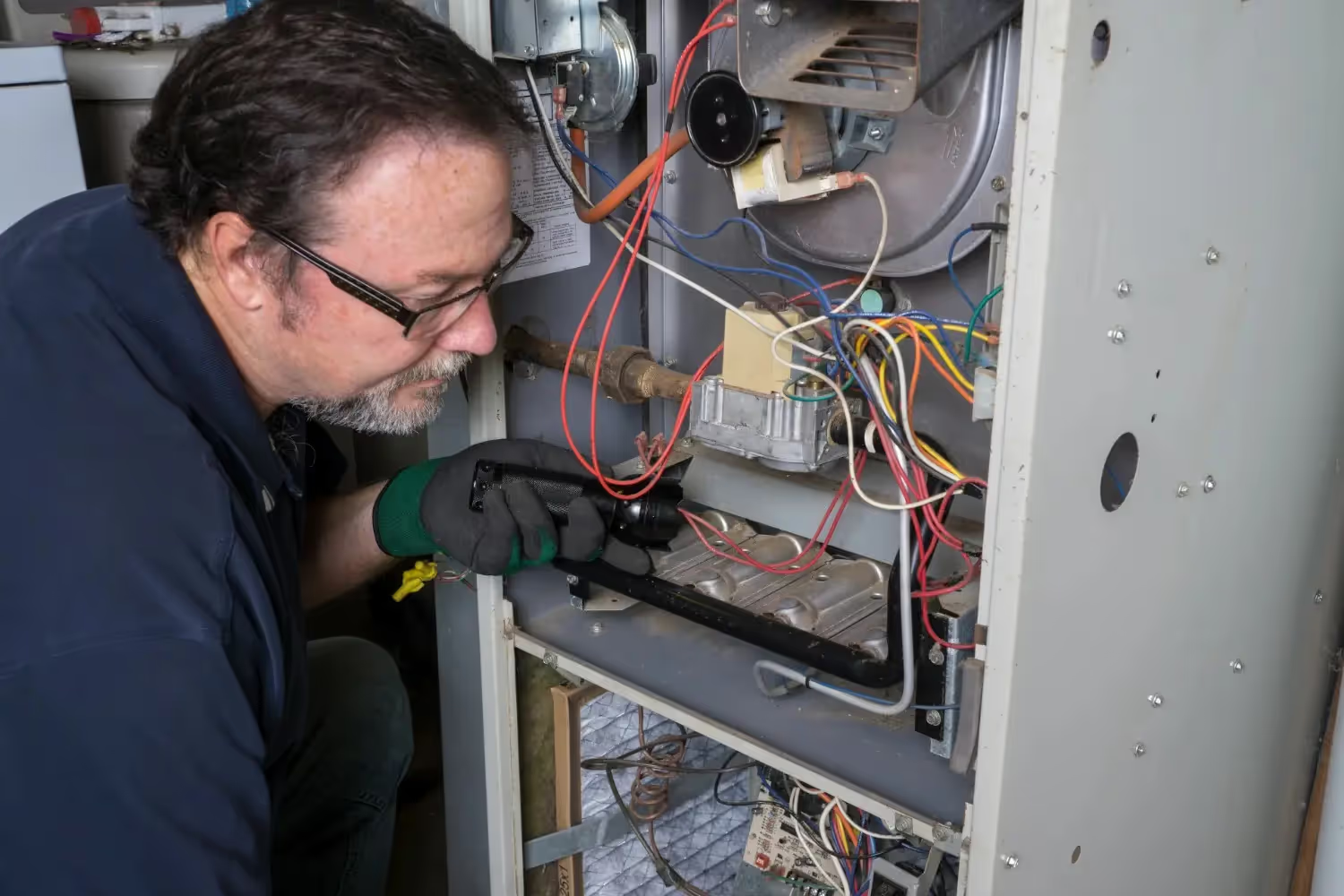
Restoring heat to a home in Larose requires a methodical approach. We do not guess; we follow a strict protocol to ensure accurate diagnostics and lasting repairs. This structured process eliminates variables and ensures that when we leave, the system is running at peak performance.
- Initial Assessment and Safety Check: Upon arrival, the technician performs a safety sweep of the area. This includes checking for gas leaks and ensuring that the area around the unit is safe for work. We listen to the homeowner’s description of the issue to narrow down potential causes.
- Diagnostic Testing: We utilize specialized diagnostic tools, including multimeters, manometers, and combustion analyzers. The technician tests electrical continuity, measures gas pressure, and analyzes flue gases. This data-driven approach pinpoints exactly where the system is failing, whether it is a mechanical blockage or an electronic failure.
- Clear Explanation and Quoting: Once the problem is isolated, we explain the findings clearly. You are presented with the specific repair required, the cost of parts and labor, and an estimated timeline for completion. Work only proceeds once you have authorized the repair.
- Execution of Repair: The technician proceeds with the repair using OEM or high-quality equivalent parts. This involves disassembling necessary sections, replacing the failed component, and reassembling the unit with precision.
- System Testing and Calibration: Replacing a part is not the end of the job. We cycle the system through multiple operational stages to ensure the new part works harmoniously with the rest of the unit. We check temperature rise—the difference between the air entering and leaving the furnace—to ensure it falls within the manufacturer's specified range.
- Final Safety and Clean-up: We perform a final carbon monoxide test and ensure all panels are securely fastened. The work area is cleaned, and any old parts are removed from your property.
Deciding Between Repair and Replacement
Homeowners often face the difficult choice between repairing an existing unit or investing in a new system. This decision should be based on mathematical and practical factors rather than emotion. While our primary goal is to repair your current system, there are specific thresholds where repair becomes economically unwise.
The 50% Rule and Cost Analysis
One of the most reliable metrics for this decision is the 50% rule.
- If the cost of the repair approaches or exceeds 50% of the value of the system (or the cost of a new unit), replacement is generally the better financial option.
- You should also consider the frequency of repairs. If you have required multiple service calls in the last two years, those cumulative costs often outweigh the monthly financing cost of a modern, efficient system.
System Age and Expectancy
Heating systems have a finite lifespan.
- Gas furnaces typically last between 15 and 20 years, while heat pumps usually last 10 to 15 years.
- If your system is nearing the end of this window and suffers a major component failure (like a compressor or heat exchanger), repair acts as a temporary bandage rather than a solution.
- Older systems also rely on R-22 refrigerant (if they are heat pumps), which is phased out and incredibly expensive to replenish. Upgrading resolves this obsolescence issue.
Efficiency and Utility Bills
The efficiency of a heating unit is measured by AFUE (Annual Fuel Utilization Efficiency) for furnaces or HSPF (Heating Seasonal Performance Factor) for heat pumps.
- Older units may operate at 60% to 70% efficiency, meaning 30 to 40 cents of every dollar you spend on energy is wasted.
- Newer models can achieve up to 98% efficiency.
- If you have noticed a steady increase in your heating bills despite normal usage, the internal wear of the system is likely causing it to run longer to achieve the same temperature. Replacing the unit can result in immediate monthly savings that help offset the installation cost.
Complying with Local Heating Regulations
Operating in this region requires specific knowledge of local codes and environmental factors. Larose has a humid subtropical climate, which presents unique challenges for HVAC equipment that differ from drier climates. The high annual rainfall and humidity accelerate rust and corrosion on outdoor units and ventilation stacks.
Permits and Professional Licensing
In Louisiana, HVAC work is regulated to protect homeowners from substandard workmanship and safety hazards.
- HVAC repair work, particularly jobs exceeding $10,000 or involving structural changes, requires a state-licensed contractor.
- Proper permitting is often required when replacing major equipment or altering gas lines. This ensures that the installation meets current safety codes regarding ventilation and clearance.
- Hiring a licensed professional ensures that your homeowner's insurance policy remains valid. Unlicensed work can lead to claim denials if a fire or water damage occurs related to the heating system.
Hurricane Season and Weatherization
The local climate impacts how heating repairs must be approached.
- Outdoor heat pump units must be securely anchored to withstand high winds during hurricane season (June to November). During a repair, we inspect these anchors to ensure stability.
- Electrical components must be protected against moisture ingress, which is common during the heavy rains from June to September.
- We check flue pipes and ventilation shafts to ensure they are sealed against water leaks, which can damage the furnace heat exchanger and lead to premature failure.
Gas Safety and Ventilation Codes
For homes utilizing natural gas or propane, adherence to ventilation codes is critical.
- Vent piping must maintain a specific slope to drain condensation properly. Improper slope can cause acidic water to pool in the furnace, destroying the induction motor.
- Combustion air requirements dictate that the furnace must have access to enough fresh air to burn fuel safely. In tightly sealed modern homes, or homes that have been renovated, we verify that the furnace is not being "starved" of air, which causes incomplete combustion and carbon monoxide production.
- Operating in this region requires strict adherence to these safety standards to ensure home comfort doesn't compromise air quality.
Why Choose Martin’s Heating?
When your heat goes out, you need more than a quick fix; you need a partner who understands the specific demands of local homes. We differentiate ourselves through technical precision and a commitment to the long-term health of your HVAC system. We do not rely on aggressive sales tactics or temporary patches — read our reviews.
Martin's Heating & Air Conditioning operates with a focus on reliability and technical excellence.
- Local Expertise: We understand the specific strain that high humidity and salt air place on heating components in this area. Our repair protocols include corrosion checks and moisture mitigation strategies that national chains often overlook.
- Comprehensive Diagnostics: We invest in high-end diagnostic equipment that allows us to see what is happening inside the pipes and wires. This reduces the time we spend in your home and ensures the repair is done correctly the first time.
- Inventory Availability: Our service vehicles are stocked with a wide array of universal and OEM parts. This logistics strategy minimizes the need for follow-up visits and parts ordering, getting your heat back on faster.
- Safety First Culture: Every repair visit includes a safety inspection of the heat exchanger and gas connections. We prioritize the safety of your family above all else, ensuring your system is not just operational, but safe to operate overnight.
Call Us Now!
If your heating system is making strange noises, failing to reach the set temperature, or has stopped working entirely, do not wait for the problem to escalate. Delayed repairs can lead to frozen pipes and more expensive component failures. Contact Martin's Heating & Air Conditioning today to schedule your repair service and restore comfort to your home.
Talk to a Local HVAC Expert
.avif)