Heat Pump Inefficiency Is More Than Just an Inconvenience
Facing unexpected breakdowns and high humidity challenges in Dulac can turn your home from a sanctuary into a sauna within hours. We understand how crucial a reliable heat pump system is for your comfort, and we prioritize restoring your indoor climate immediately. Contact us now to schedule a diagnostic visit or inquire about available financing options.
When your system struggles to keep up with the demands of the Louisiana climate, waiting is rarely an option. Martin's Heating & Air Conditioning specializes in diagnosing and resolving heat pump failures efficiently, ensuring your system handles both the intense summer heat and the damp chill of winter.
- Rapid response and repair services: We prioritize urgent calls to get your system running again, often providing same-day solutions.
- Expert diagnostics to prevent future issues: We identify the root cause of the breakdown, not just the symptom, to prevent recurring failures.
- Affordable solutions tailored to your specific needs: We provide clear, upfront explanations of the required repairs without hidden fees.
- Reassurance: All services come with full licensing compliance and optional extended warranties for your peace of mind.
Immediate Heat Pump Restoration and Service Scope
When you request service, the objective is to minimize downtime and restore the thermal balance of your home. A heat pump is a complex system that manages heat transfer rather than just generating heat, meaning it relies heavily on precise refrigerant levels, airflow, and electrical communication. Our technicians arrive equipped to handle the specific operational challenges found in Dulac, where high humidity loads put excessive strain on compressor units and coils.
Upon arrival, the focus shifts immediately to accurate fault isolation. This is not a cursory glance at the unit; it is a systematic evaluation of the refrigeration cycle and electrical components. The service includes a comprehensive check of the thermostat calibration, blower motor performance, and the condition of the reversing valve—the critical component that switches your unit between heating and cooling modes.
You can expect a transparent breakdown of the necessary repairs. Whether the issue lies in a failed capacitor, a refrigerant leak, or a malfunctioning defrost board, the explanation will detail exactly what failed and why. The goal is to provide a permanent fix that restores the unit to factory specifications, ensuring it can dehumidify your home effectively.
The Repair Execution Process
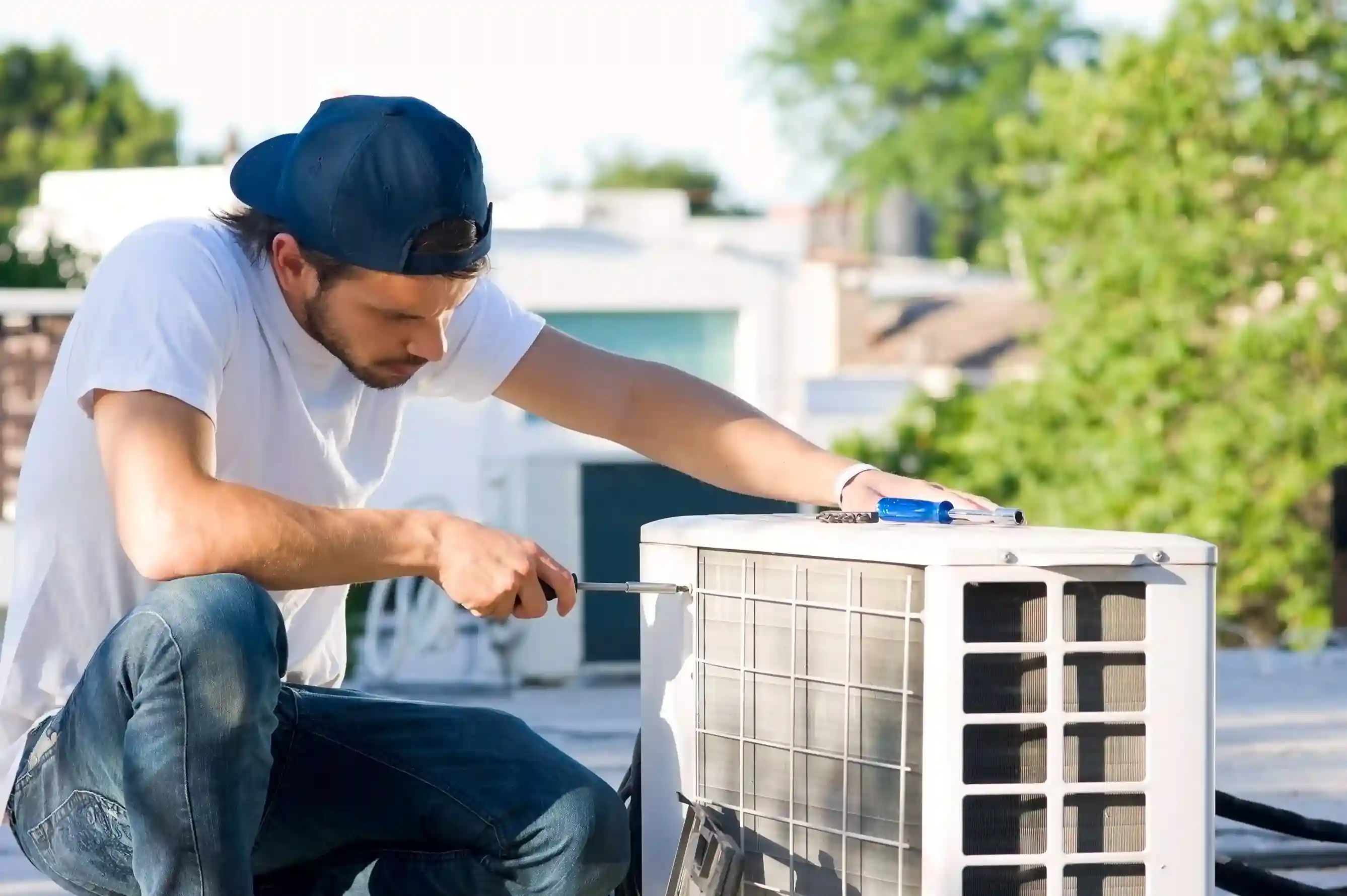
Understanding the steps involved in a professional repair helps you gauge the progress and quality of the work being performed. We adhere to a strict protocol to ensure safety and efficiency during every service call.
- Initial System Assessment: The technician begins by gauging the static pressure and checking temperature differentials (Delta T) across the evaporator coil. This data reveals how well the system is transferring heat and highlights airflow restrictions or refrigerant issues.
- Electrical Safety Inspection: All high-voltage connections are inspected for signs of overheating or corrosion. Loose wires or pitted contactors are common culprits for intermittent failures and are tightened or replaced to prevent fire hazards.
- Component Isolation and Testing: Individual components, such as the compressor, fan motor, and sensors, are tested for continuity and proper resistance. This isolates the specific part causing the breakdown.
- Refrigerant Charge Verification: Using digital gauges, the technician measures superheat and subcooling levels. This ensures the refrigerant charge is precise, which is vital for the efficiency and longevity of the compressor.
- Repair Implementation: Once the fault is confirmed and you have approved the scope of work, the repair is executed using high-quality, manufacturer-approved parts.
- Performance Validation: After the repair, the system is cycled through all modes of operation. We verify that the reversing valve shifts correctly, the auxiliary heat strips engage if needed, and the system effectively removes humidity.
Critical Signs Your System Needs Professional Attention
Heat pumps often give warning signs before a catastrophic failure. Recognizing these indicators allows for proactive repairs that are often less expensive than emergency service calls.
- Short Cycling: If your unit turns on and off frequently without reaching the set temperature, it indicates a potential issue with the thermostat, a clogged filter, or a refrigerant leak. This places immense strain on the compressor.
- Icing Up in Summer or Winter: While a small amount of frost in winter is normal before a defrost cycle, a solid block of ice in summer or winter indicates restricted airflow or low refrigerant. This requires immediate professional intervention to prevent compressor damage.
- Stuck Reversing Valve: If the unit runs fine in cooling mode but blows cold air when set to heat (or vice versa), the reversing valve or its solenoid may be stuck. This is a definitive mechanical failure specific to heat pumps.
- Auxiliary Heat Constantly Running: If your thermostat indicates "AUX" or "EM Heat" is on when the outdoor temperature is mild (above 40°F), your heat pump is not functioning efficiently. Reliance on strip heat drives up energy bills significantly.
- Unusual Noises: Grinding, screeching, or clicking sounds suggest loose parts, failing motor bearings, or electrical relay issues. These sounds should never be ignored.
When to Repair vs. When to Replace
Making the decision to repair an aging unit or invest in a new system is a financial calculation based on efficiency, age, and future reliability. We help you navigate this decision with data, not sales pressure.
- The 50% Rule: If the cost of the repair approaches 50% of the value of a new system, replacement is generally the more fastidious financial choice. A major repair on an old unit rarely increases its resale value or efficiency.
- System Age: Heat pumps in our region typically last 10 to 15 years due to the heavy workload of year-round operation. If your unit is over 12 years old and facing a major component failure (like a compressor), replacement offers better long-term value.
- Refrigerant Type: If your older system utilizes R-22 refrigerant, repair costs for leaks will be astronomically high due to the phase-out of this chemical. upgrading to a system that uses R-410A or newer refrigerants is often the only logical path.
- Frequency of Breakdowns: If you have required repairs more than twice in the last two years, the system has become unreliable. The cumulative cost of service calls often outweighs the monthly payment of a new, high-efficiency unit.
- Energy Efficiency Ratios: Newer heat pumps offer significantly higher SEER (Seasonal Energy Efficiency Ratio) and HSPF (Heating Seasonal Performance Factor) ratings. Upgrading can result in immediate monthly utility savings that help offset the installation cost.
Local Considerations for Dulac Residents
Operating a heat pump in Dulac presents specific environmental challenges that standard repairs must account for. The proximity to water and the high annual rainfall impact how systems degrade and how they must be maintained.
- Humidity Management: The primary battle in our region is humidity. A heat pump must run long enough to pull moisture from the air. Oversized units or units with incorrect blower speeds will cool the air too quickly without dehumidifying, leading to a clammy indoor environment.
- Corrosion Protection: Salt air and high moisture levels accelerate corrosion on outdoor coils and electrical contacts. We check for rust and degradation on the outdoor unit's fins, which can severely restrict heat transfer.
- Drainage Requirements: With heavy rainfall and high condensate production, condensate drain lines are prone to algae growth and blockages. Ensuring proper drainage is essential to prevent water damage to ceilings or floors.
- Permitting and Electrical Codes: Major repairs involving electrical components or system replacements must adhere to local building codes. We ensure all work is compliant with current safety standards, protecting your home and insurance validity.
- Seasonal Transitions: Our mild winters mean the heat pump doesn't run in heating mode for long periods. However, when the temperature drops, the system must switch over instantly. We recommend pre-season checks to ensure the reversing valve has not seized from inactivity.
The Value of Specialized Heat Pump Expertise
General HVAC knowledge is often insufficient for the nuances of modern heat pump technology. These systems are far more sensitive to charge imbalances and airflow restrictions than standard gas furnaces or straight cool air conditioners. Martin's Heating & Air Conditioning employs technicians who undergo continuous training on the latest inverter-driven technology and variable-speed systems.
Accurate diagnostics save money. A misdiagnosis leads to parts changing—replacing working components in hopes of fixing the problem. Our approach relies on verifying failure through testing. If we condemn a compressor, it is because we have measured the windings and confirmed a short or open circuit. If we recommend a new expansion valve, it is because we have tracked the superheat fluctuations that prove it is sticking.
We also focus on the entire building envelope. A heat pump cannot perform efficiently if the ductwork is leaking conditioned air into the attic or crawlspace. Our repair process often involves inspecting accessible ductwork to ensure that the capacity you are paying for is actually reaching your living space.
Ensuring Long-Term System Reliability
Once a repair is completed, the focus shifts to maintaining that performance. Heat pumps work year-round, meaning they accumulate wear and tear twice as fast as systems that only run during one season. Regular maintenance is the only way to protect the investment you have made in your repair.
- Coil Cleaning: Dirty coils reduce the system's ability to absorb and reject heat. This causes the compressor to run hotter and longer, shortening its life.
- Filter Discipline: We advise on the correct filter type for your specific system. High-MERV filters can sometimes restrict airflow too much for certain heat pumps, causing freeze-ups.
- Refrigerant Monitoring: Small leaks can go unnoticed until performance drops. Regular checks ensure the system remains sealed and charged.
Book Your Service Now
Your comfort and the safety of your home are our primary metrics for success. We do not apply band-aid fixes; we apply engineered solutions designed to withstand the local climate. When you choose professional service, you are choosing a restored home environment, lower humidity, and predictable energy usage.
Don't let a malfunctioning heat pump compromise your indoor air quality or drive up your electric bill. Secure a professional assessment today to ensure your system is operating at peak efficiency.
Contact us now to schedule your heat pump repair service.
Talk to a Local HVAC Expert

.avif)