Duct is the part of an HVAC system nobody sees and almost nobody sizes correctly. You can install perfect equipment and still get a house that never feels right, because the duct decides how much of that capacity actually reaches the rooms. In South Louisiana the stakes are higher than most places. Duct runs through attics that hit 130 degrees and higher, and every foot of leaky or under-insulated duct is capacity you paid for and never received.
What Bad Duct Design Feels Like
You will notice symptoms long before you suspect the duct. One end of the house is comfortable and the other is not. The system runs almost continuously in August and still cannot reach the setpoint. Registers in the far bedrooms produce airflow you can barely feel. The air is cold but the house feels damp. Some rooms whistle at the register while others are silent. Doors pull shut or drift open on their own when the blower runs, which is a pressure imbalance telling you the return path is inadequate.
Why Duct Fails Here Specifically
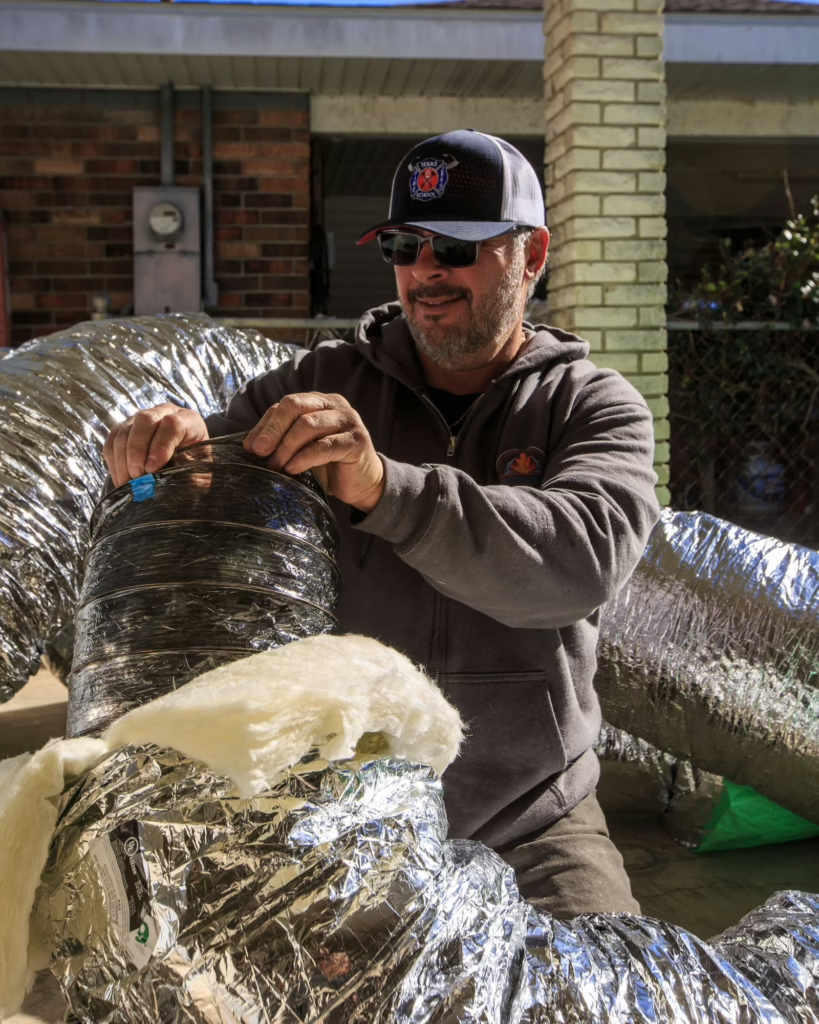
Flexible duct sags between supports and every sag is a restriction. Insulation compresses where it rests on a truss. Joints sealed with cloth tape instead of mastic let go within a few years in attic heat. Humid attic air condenses on cold duct wherever the vapor barrier is broken, and that moisture eventually shows up as a stained ceiling or a musty smell. Add rodents in a coastal parish and you get chewed insulation and open seams. Most of the duct we inspect is not undersized by design, it has simply degraded.
How We Approach Duct Work
We start with a load calculation for the house rather than the equipment already installed, because sizing duct to the wrong number is how the original problem happened. From there we work out the required airflow per room, the trunk and branch sizing to deliver it, and the return path to get that air back. Return is where most systems fail. A single central return trying to serve five closed bedrooms cannot balance a house no matter how well the supply side is built.
Repair, Reseal, or Replace
Not every duct problem needs a new system. Sealing joints with mastic, adding proper support to eliminate sags, repairing crushed sections, and adding a return can transform a system for a fraction of a replacement. When the existing duct is undersized for equipment that has already been upgraded, or when the insulation is gone, replacement is the honest answer. We show you what we found and what each option costs before you decide, and we do not quote a new air handler to fix a duct problem.
What Good Duct Buys You
Correct duct lowers run time, which lowers the bill and extends equipment life. It holds humidity down because the system runs longer at lower capacity instead of blasting and shutting off. It removes the room-to-room swings that make people turn the thermostat down four degrees to fix one bedroom. If you are already looking at indoor air quality, duct is where that conversation actually starts, because sealed duct stops pulling attic dust into the airstream. Call (985) 632-6428 to have yours evaluated. Louisiana license 40204, in business since 1967.